Common But NOT Normal | Pelvic Floor Truth | Dr. Charu Chopra
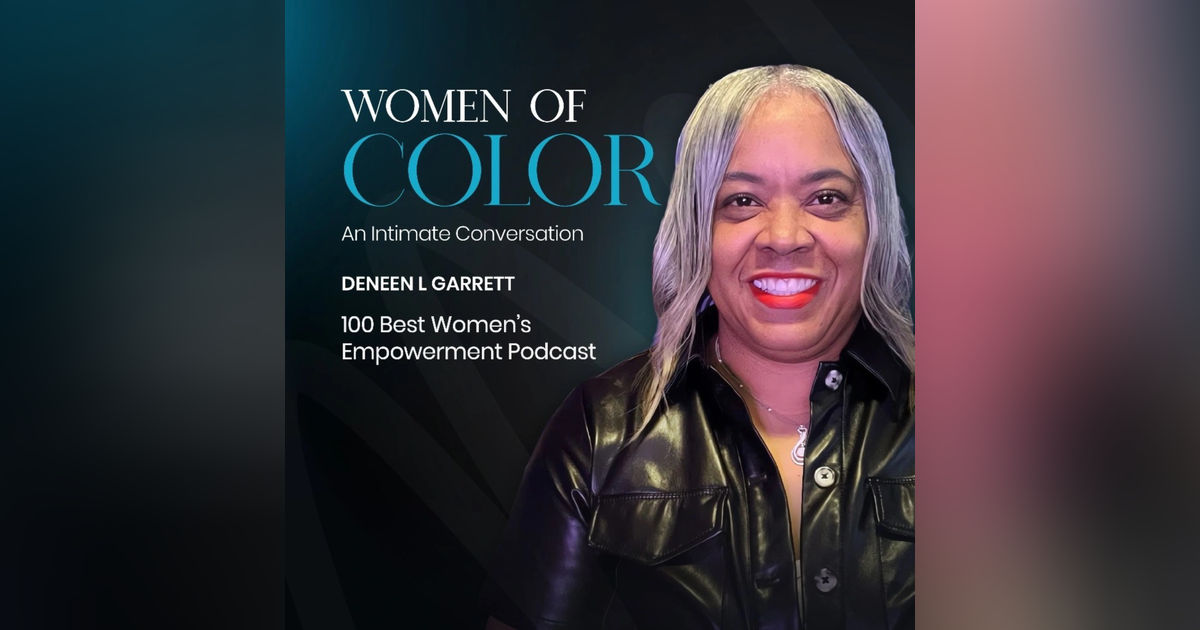
Common but NOT normal. Leaking, pelvic pain, and bladder issues are symptoms women have been told to live with. Dr. Charu Chopra — women's specialist physical therapist, award-winning clinic director, and first-generation immigrant — is here to set the record straight. In this episode, she unpacks the pelvic floor truths your doctor hasn't told you, why Black women's postpartum mortality rate is 3x higher than the rest of the population, what first-generation immigrant women have to unlearn to own their power, and why advocating for your body and your leadership are the same act. Grit. Growth. Gratitude. This is what it looks like in real life.


Common but NOT Normal!
She arrived in the U.S. at 27. Never been on a plane. Left her entire family in India. Faked her accent so no one would notice where she came from. Worked harder than anyone in the room — and learned the hard way that hard work without a voice is invisible.
Dr. Charu Chopra is a physical therapist of 17 years. For the past 7+, 100% of her patients have been women. She specializes in pelvic floor and breast rehab therapy — and she is one of the most honest, direct voices in women’s health working today.
In this episode of Women of Color: An Intimate Conversation, Deneen L. Garrett sits down with Dr. Chopra for a conversation that covers far more ground than expected: from the intersection of identity, immigration, and entrepreneurship, to the pelvic floor truths most women have never heard from a healthcare provider.
What Dr. Chopra covers in this episode:
- Urinary leakage, pelvic pain, pain with intercourse, and bladder urgency — common, but NEVER normal. Every woman deserves to know this.
- The Kegels myth — why doing Kegels with tight pelvic floor muscles makes things worse, not better.
- Black women’s postpartum mortality rate is 3 times higher than the rest of the population — and pelvic floor physical therapy is recommended for every woman after birth, regardless of delivery type.
- Sexual trauma as an unaddressed cause of pelvic floor dysfunction — and why Dr. Chopra is often the first healthcare provider who ever asked.
- Direct access states — in Arizona and many others, you don’t need a doctor’s referral to see a pelvic floor PT.
Dr. Chopra also shares the unlearning that shaped her leadership: how she moved from assimilation to ownership, from code-switching to speaking her full truth, and how she discovered that the same courage it takes to cross the world is the same courage it takes to advocate for yourself in any room.
This episode is for the woman who has been dismissed. Who has normalized pain. Who has been waiting for a green light that was never coming. Own yourself. Set your boundaries. Never doubt yourself.
Women of Color: An Intimate Conversation is a Top 20, 100 Best Women’s Empowerment Podcast. WOC Live streams every Thursday at 1:00 PM ET on YouTube.
📺 Watch on YouTube: https://www.youtube.com/@DeneenLGarrett
Produced by The Leon Thomas Group: https://www.theleonthomasgroup.com
✨ GUEST SPOTLIGHT: DR. CHARU CHOPRA
Website: https://www.womenofcoloranintimateconversation.com/guests/charu-chopra/
👑 ABOUT YOUR HOST: DENEEN L. GARRETT
Deneen is a Cultural Alchemist, International Speaker, and the visionary behind the Dream Lifestyle™ Collective, the premier sanctuary for Black women 50+.
Join the Collective: https://www.skool.com/dream-lifestyle-collective-1653
Website: https://deneenlgarrett.com
Inquiries: Deneen@deneenlgarrett.com
Hey, everybody, and welcome back to Women of Color Live, the live version of Women of Color, an intimate conversation, a top 20 women's empowerment podcast.We center and empower women of color.We're here every Thursday at 1:00 PM Eastern.You can always catch the replay and/or listen on your favorite podcast platform.So before I welcome s- today's guest, I wanna shout out our production team at the Leon Thomas Group, and we have back this week O.So O, welcome back, and, um, thank you for being here with us.So today's guest was recommended by last week's guest, Gia Warren.And if you recall, Gia is very instrumental to and in the Dream Lifestyle Collective.And also, before, before I go to today's guest, I wanna share something exciting that has happened since last week.Let's check it out.Hi, I'm Denene Millner, a cultural alchemist who shifts, shapes culture through storytelling, through writing, through speaking, through my top 20 women's empowerment podcast.And if you're seeing this, you're watching me on Women of Color Live, the live version, the weekly live version ofI am coming to you to ask you to vote for me.I am in the running to become entrepreneur of impact, and it's gonna take all of us to get me there.So check this out and stay tuned.All right, all right.So today's guest is Dr. Charu Chopra.She is a healthcare leader, entrepreneur, women's specialist physical therapist, clinic director, and first-generation immigrant who moved from India to the US in 2007 and turned uncertainty into opportunity.She believes that grit, growth, and gratitude can transform anything, and her life is proof.Dr. Chopra, welcome to Women of Color Live.Thank you, Denene.Thank you for giving me this opportunity.And a huge shout-out to you, as well as women of color out there who are giving voice to all of us and empowering, uh, for this next generation of women that we are gonna raise.I have a daughter myself, so I was so excited and proud to share this podcast with her.Um, so grateful for what you're doing.Oh, thank you so much.And you know what?Everything that you said is the reason why this podcast exists, right?It's to give us a platform to use our voices.It's to uplift us, to empower us, and the girls who are coming, um, behind us.So thank you so much for recognizing that.So let's get into our conversation.So who were you before the physical therapist license, before the clinic, before the title, and what was the, the decision that shifted how you saw yourself as someone built to lead?Wow.That's a tough one, Denene.I will say that.The, and the reason I think it's tough is as women, we are always taking and identifying ourselves into the roles we have given.We see always or identify ourselves as daughters or sisters or wife or mom.But in the whole realm of, you know, doing everything for everybody, we forget who we are.And your question is just, um, you know, questioning my identity apart from those roles.So let me try.Uh, and I think my answer would be as a young girl, without connecting myself to these different roles, I was somebody who always was curious, who always questioned everything, whether it was disparities among genders, uh, whether it was financial disparities.Um, I was born and raised in India.I was there for my first 27 years of life.So it always bothered me on why there's so much disparity.Back then, the only thing that I knew is in order to change something, you have to be that change.Because, uh, very soon early in my life, I realized if I don't question these things, nothing is gonna change.Because nothing changed for the generations above me, especially females in India, and now I realize it's a worldwide systemic issue and just not an India issue.Um, so I knew something had to be done.Uh, early on my tools were hard work and, uh, voicing myself.But, you know, as a young girl, when you're naive, you don't have that confidence and you just don't know, it turns early on into a little bit of rebel as well sometimes.So I would agree that I was what you call as a rebellious child then.Uh, but it was not a rebel-for small things.It was a rebel for a bigger things that I could connect later in my life.And coming to this podcast really helps me give that voice to women who are listening to us at the moment.And gender equality is just not about women's rights, it's also giving equality and a better working atmosphere and platform to men as well.Um, that's what I have realized, and that's who I was, and that's who I am today.And I love everything that you said, right?And you said a lot, and so I do wanna kinda back into some of the things.So first of all, um, you became the change you wanted to see, right?And that's what, you know, a reason for this podcast, to empower us to be that change.If something is not going the way that you want it to, you know, instead of waiting for someone else to make the change, it may be up to you to make that change, right?And so that's what you did, that's what this podcast does.And also, I want those who are watching or listening to pay attention to the things that, um, Dr. Charu is saying, right?She's saying how she was rebellious, but she was rebellious in a way to make a difference, to help to change our lives, and not just for one person, for, for people coming behind her.She started off by saying she has a daughter, and she shared the podcast with her daughter because she wants to empower her daughter.She wants to give her tools to live the life that she wants to live, and that's what we wanna do for you as well.We wanna give you those tools to live the life that you want to, and get into good trouble, right?As you were speaking, I was thinking about getting into good trouble.I was thinking about, you know, quiet, you know, closed mouths don't get fed and, you know, all those things, um, came to mind when you were talking.And so this podcast is truly about empowering others.It's about giving them those tools so that they can actually walk away with, you know, something that they can do in changing their life.And you made a great point by saying that when we, you know, lead and make things happen, it's not just for us, it's not just for women, it's for everybody.Everybody benefits.Right?Everybody benefits.100%, yes.Yeah.And so if you are watching right now, um, please drop in dreamers.Um, if you're part of the Dream Lifestyle Collective, if you are a family member, uh, give us a heart, um, and all others drop WLC.We wanna know that you're out there.So what did you have to unlearn as a first-generation immigrant woman balancing family, cultural identity, and an entrepreneurial vision, and how has that changed how you define success and visibility now?Hmm.You have many list of tough questions out here.Well, um- Thought-provoking.Thought-provoking.Absolutely.Um, definitely I would say as a first-generation immigrant, uh, you don't really have a roadmap laid out.And I'll share you a story.When I first, uh, came to US, it wasI was 27 years old.I had never seen an airport.I've never been on a plane before.But the pain of leaving my family behind was so strong, and it still is because all my family still is back in India.I just knew that this is my chance, and IThis is my only chance, and I cannot let myself lose at any point.So I worked extremely, extremely hard, and I was trying to be part of the system.I would try to notice, "Oh, how is she dressed up?How does she say something like this?"Because I just wanted to be injust be like one of everybody.I would, like, fake my accent, and if somebody would say, "Hey, that's a beautiful accent.I wonder where is that from?"You know, people would tactfully try to ask me.I would get so nervous and conscious of myself- Mmthat, God, even with all this fake that I'm putting out there, they're able to identify me, and I had to unlearnHard work is great and it's extremely essential.But more than the hard work, or I would say along with the hard work, a voice has to merge with it.Because you can just keep working hard at what you're doing, but if you're not have a voice with it, you're not gonna have any visibility.And it's extremely crucial, especially nowadays the world we live in, to have that visibility, to have a bigger impact, not just around the people you are around, but beyond that.So that was one thing that I had to unlearn, that hard work is essential, but I have to marry the voice along with the hard work.The second thing I had to unlearn withwas to be comfortable with myself.I am a unique person.I have a very unique journey, and I should be proud of hermyself, and I should own who I am rather than being trying to somebody else.Um, so that is something that took me years, you know?Uh, but now I am at the point where I'm like, "Oh, I'm from India, and I was born and raised there, and this is who I am.Tell me more about yourself."And opening that door helped me realize that more and more people are opening their doors as well.They are telling me about their vulnerabilities, their backgrounds, their cultural beliefs, their family beliefs, and we are creating a more open environment where people are not hiding behind shells and trying to be somebody else.Yes.Yes to all that.So here are some things that, um, I wrote down that kinda came to mind.So owning it, right?Owning who you are, your identity.Um, you mentioned- Mmabout the hard work and, right?It's not just that.It's never just that.It's always an and, um, and that and is the voice.And again, having a voice, using your voice, because when you do, you give others permission to use theirs.And also, you know, initially what youwhat I heard, um, and what came to mind was assimilating, um, and also code switching.So I don't know if you know about code switching, but it's something we talk about in the Black community, whereas, you know, we go into their environments, and we kinda shift how we talk, right?Um, we're not using, you know, the, the comfortable vernacular that we have when we're amongst family members.It changes.Or even there's a, a joke when, um, you know that it's a, a, a bill.You know, back in the day, you knew that it was somebody calling about bills or something like that by the way you answered the phone or how you spoke on the phone, right?Uh, because you code switch and- Mm-hmmand you became, you know how they say professional.Um, is, you know, that.So those things came up t- uh, while you were speaking.Another thing that I wanted to touch back on that you talked about earlier and kinda came up just now as well is intersectionality.The intersections of us, we're not just one thing.Um, we're multiple things.Like you're a first generation, um, immigrant.You're a woman.You're a mom.Um, you are a physical therapist.All the things, all the different identities that make us up.And earlier you were saying how, "Oh, man, how do I, you know, how do I separate that," right?'Cause they're all integrated.They're all part of me, and that's fine.That's who we are.We're more than one thing.Own every aspect of who and what you are.And again, when you do, you give others permission to do the same.Absolutely, 100%.And thank you so much for, uh, summarizing it so beautifully.You're welcome.You're welcome.All right.So one more question before we, uh, go to a break.You specialize in pelvic floor and breast rehab, work that is deeply personal and deeply underrepresented.What do you wish more women of color understood about advocating for their health, and how does that connect to advocating for their leadership?Thank you so much for asking this question because that is truly something I'm very, very passionate about as well as gives me the purpose of being in this fi- in, in this field.I100% of my patient demographics is, for past 8 years, has been just women.I have been a physical therapist for 17 years, and I treated both men and women.And now past 7 years, as I said, majority of my patient population is women.And what I am learning is w- especially with women of color, I would say we are just suffering silently, dismissing our own symptoms of pain, of urinary or fecal incontinence, and-Among everybody else, among our community, we have normalized it, unfortunately.That isThat breaks my heart, and I really, really want the listeners to understand that be a self-advocate of yourself.If you have pain, you truly have pain.It's not in your mind.No matter what a healthcare professional tells you, you have to stand up for yourself and question their clinical reasoning.Mm.As a pelvic floor physical therapist, I would want every woman to listen to me and understand leaking, urinary leakage no age is normal.It's never normal.It's very common, yes, but common doesn't mean normal.Mm.If you see your friends going to the restroom every 10 minutes and saying, "Oh, I have a small bladder," that is not normal.They need to seek pelvic floor physical therapy.If you see somebody crossing their legs while coughing or sneezing or laughing, theyThis is not normal.They need to come and talk to their provider and come see pelvic floor physical therapist.No matter if you have no kids, no matter if you have 2 kids, if you have 20 kids.No matter if you're 10, if you're 60, if you're 90.I had a 94-year-old woman with 100% outcomes.She came to me, she was completely dependent on wearing Depends and diapers past so many decades, and she came, got treated, and now she doesn't need them at all.Mm.So just because you're old doesn't normalize leaking.So I want all the women to remember that.The second thing that I want to talk about, pain with intercourse.Any time we talk about especially pelvic symptoms, there's such a taboo or shame attached to it.1, you don't needThere's noThere should be no shame.It's very natural.We all pee, poop, and have sexual functions, right?That's, that's our id- that's part of our identity, so we don't need to see it as shameful.So a lot of women don't even ever bring their symptoms to the providers, especially when it comes to pain with intercourse.They think, "Oh, it is something that I just have to live about."Uh, unfortunately, I have so many women, when I talk to them, they're like, "Isn't it supposed to hurt during intercourse?"And I'm like, "No, it is not supposed to hurt while you're having a sexual activity."Again, just like how I said for leaking, pain with intercourse, pain with sexual activity is never normal.Again, come and talk to your provider.And the last one, actually second last one that I want to talk about, um, is something that is again extremely rare to be talked about, is orgasm.Women have every right to have an orgasm during intercourse, during sexual activity.In fact, I tell them it's essential for both the partners to have an orgasm.And again, going back to the same thing, there's so much taboo attached to it.If you are not having an orgasm during an intercourse, common but not normal, come talk to your provider.And my last one, breast cancer screening is essential.If your doctor is not bringing it up, I want you to be self-advocating for yourself and telling them, "This is my family history.This is not my family history.When can I start my annual mammograms- Mm-hmmand Pap smears?"Wow.Okay.So I totally didn't expect for us to go where we just went, but it's needed.It is so needed.Yes.Pelvic floor conversation, never heard that.Yes, we, you know, we talk about breasts, we talk about breast cancer, um, but the pelvic floor, never, I've never had that conversation.Seen the, you know, the commercials for Depends, um, and things of that nature, but really never had that conversation.So again, those that are watching or listening, if you are experiencing any of that, if you are experiencing having to urinate too often, uh, every 10 minutes, if there's leakage, um, if you are having pain in intercourse, if you're not having an orgasm, have a conversation with your doctor.And so, like, what, what should they say?Give us an example of what you would want, um, a woman to come to you and say if she's experiencing- SoYeah.So as aSo our function of our pelvic floor is mainly 3 things.Bowel, bladder, and sexualIf frequency of urination is higher than 2 to 4 hours, come see us.If you're having any kind of leakage with sneezing, coughing, jumping, l- laughing, come see us.If you have pain with intercourse or not having the ability to have an orgasm, come see us.Again, another thing that you can come and see us is during your postpartum and postpartum care.American College of OBGYN recommends every woman, regardless of vaginal delivery, regardless of C-section, have physical therapy as part of their 4th trimester.That means, which is after the baby is delivered.So pelvic floor physical therapy, essentially every woman needs it.Even if you have never been pregnant, if you have never been sexually active, if you have any issues with bowel, bladder, with bowel, constipation, hard stools, straining during pooping, straining during peeing, all these are symptoms that are not normal.Talk to your doctor.Come see us, pelvic floor physical therapist.Um, also, I just want to add, there are a lot of states who have a direct referral to physical therapy.For example, I'm based in Arizona.Arizona has a direct referral, so you don't even need to go to a doctor.It'd be great because then they can run some diagnostics and rule out some things, but you can come directly to a pelvic floor physical therapist, whether you're pregnant, whether you're postpartum, whether you have any issues with, uh, bowel, bladder, or sexual function.You can directly come to us, and we can help you.And so what's like one of the things that a person would do?So yes, they're, they're having these issues.They come to the pelvic floor, um, therapist, physical therapist, and then what, what's happening?Like- Okaywhat things that you have them do to correct this?Okay, great question.So as a physical therapist, we specialize in musculoskeletal system, and our pelvic floor has the same kind of muscles that the rest of the body has.So when you go to see your OBGYN, they are looking at your uterus, your ovaries.When you go to your endocrinologist, they are looking at your hormone levels.When you're going to a urologist, they are looking at your bladder.Similarly, as pelvic floor physical therapist, we are looking at the muscles in pelvic floor.And the symptoms I mentioned to you, Dineen, that indicates that there's something not working right with these muscles, and that's why you're leaking or having increased frequency or constipation or not being able to have an orgasm or pain with intercourse.We work on these muscles.Now, practically what it looks like is I spend one-on-one time with my patients in a very, uh, comfortable, enclosed setting.I take a very thorough subjective of everything that I mentioned, along with their past medical history, any surgeries they had in the past, what are their goals, what are their beliefs, and then after that we do a thorough exam.I check my patients from head to toe all the way, if they have any TM joint issues to their neck issues, because believe it or not, a TMJ joint can ha- relate pain as well as issues with your pelvic floor.Then I do an internal and an external exam, and I tell my patients, I understand getting an internal pelvic floor exam is intimidating.You're not prepared for it because they're like, physical therapy and pelvic floor exam?Just doesn't, you know-um, connect, but I explain them.I sh- use models.I show them.I give them time.I say, "If you are not comfortable with an internal exam today, I totally understand.Let's give it a few visits.There's more that I check-And then based on if these muscles are tight, we work on breathing, we work on stretching, we work on relaxation exercises.And if these muscles are just normal tone but have weakness, we work on their strengthening.Um, so based on what the findings are, we come up with a very individualized plan of care.We also talk about healthy bladder habits.Uh, you know, what are some of the bladder irritants?Uh, I even talk to them about their posturing with peeing and pooping.A lot of women, especially in public restrooms, slouch and do not comfortably sit on the commode.And I explain them, what's it doing to your pelvic floor muscles are not completely relaxed.And I understand the hygiene aspect for it, but you can have disinfectant wipes, sprays, toilet paper covers, but see when you sit down completely on a commode how your muscles are getting relaxed and you're able to be comfortably reduce your chances of UTI.So there's a lot of education that goes along with what we are doing in just terms of exams.Then I also, uh, see them follow- for follow-ups 2 to 3 times sometimes based on what's needed.Um, we include a lot of exercises as well along with that, because our pelvic floor never works in isolation.It works with our back muscles, our abdominals, our hip muscles.So we want to make sure everything is being treated.I tell my patients I treat a whole person.I don't treat body parts.Um, and that is essential to their best outcomes.Yeah, absolutely.So what we're talking about right now is definitely a needed conversation.I'm sure that there's plenty who are watching or listening who probably never considered this at all, and probably can say, "Yes, I have at least one of those things.Like, I'm experiencing at least one of those things."Never thought what to do with it, just decided, "Oh, I'll just live with it," you know.It's, it's common.Um, but as you said, it's common doesn't mean normal.And so that's, again, the reason why we're here.That's why the Women of Color in Intimate Conversation podcast exists, is to share this type of information to, again, do what?Empower us.Empower us to live our best lives, our best selves, and part of that is being healthy.So I do wanna ask, like, 2 more questions around this- Okaybefore we go to the, um, to the break.So the first question is, um, what is the common reason a woman experiences this?That's the first question.And then- What is the commonSay that again, sorry.Yeah.So, um, a, a woman who comes in, you know, she's having, um, she's having these issues with her pelvic floor.Like, what is the common number one reason women are having this pelvic floor issues?I wish there was just one reason that I can lay out.but IHmm, that's a tough one.But I feel, especially I would say with women of color, unresolved stress is one of the things that brings in the symptom a lot.There are multiple other reasons for it.And I'll give you an example.Girls who are in middle school and high school right now do- doing cheerleading and being part of so many sports, their exercise programs are just so focused on agility or arm strength or leg strength, but often their pelvic floor is ignored.And this continuation of ignorance over the years and the pelvic floor stress it goes through, whether it's hormonal changes during puberty, during pregnancy, during childbirth, during sexual activities, it all just adds up.If there's-- I wish I had one reason that I can say, "Okay, this is the top reason."Unfortunately, no.And especially, Deneen, in women of color, one of another neglected topics is sexual trauma.Mm.Mm-hmm.It's never talked about.It is something that's unresolved.There are women who come see me, and they cannot just stop crying because I was the first healthcare provider who talked about any history of sexual trauma.Sometimes they have not even told their family about it, forget about the healthcare professionals.So, uh, that also adds to their pelvic floor muscle guarding, and they don't know until they start having these symptoms.Yeah.And even though you said there's not, like, one thing that you can pinpoint, you still shared something that I, I'm sure a lot of people are not thinking about.'Cause again, I thought nothing about pelvic floor, period.Right?Um, that has never been anything that has been, you know, top of mind for me.And so you shed a light on a lot, um, you know, a lot for us to think about and consider and to advocate for ourselves.And so the other thing that I wanted to-- the other question that I wanted to ask, is there, like, one thing that you, uh, recommend as preventative?Like, I'm thinking Kegels, right?I'm thinking, "Oh, this is kind of what Kegels are for," whether, you know, you have a-- you know, you get pregnant or not.Um, is, is that what you would recommend as far as preventative?I am so glad, Deneen, you said that because I hear this every day.And I'll tell you, Kegel has a place, but it doesn't land in everybody's pelvic floor.first, so think about it.Let me give you an, a descriptive example on why Kegel is not for everybody, and that's one of the, uh, myths that I want to bust out today.Women think, "Oh, I am having leaking.Let me just start doing Kegels, and it'll fix on its own."For some women it might, and for the majority of women it won't, and here's why.Just for a second, think about, as I said, our body's covered with muscles, and so does our pelvic floor also has muscles.So just for a k- second, think of my neck muscles right here.Okay?My neck muscles right now, as you see, has a normal tone.They are not tight.They are not loose.They are just relaxed right here.If I start going to the gym and start doing some strengthening exercises, it would work perfect.It would start strengthening me, right?Yes.Now, let's say if these muscles are tight and I give you a dumbbell, I give you a Kegel, what is it doing to your pelvic floor muscles?Nothing.In fact, it's gonna start hurting you, and you're getting more frustrated that, "Oh, I'm doing Kegels all day long, and I'm still leaking.Nothing is helping."And that's the reason Kegel is not the answer for everybody.A lot of women have a lot of pelvic floor muscle tightness, a lot of pelvic floor guarding.So the first thing that needs to be done is bring these tight muscles to a normal tone before we start doing Kegels.Got it.Does, does that make sense, Deneen?Yeah, it does.Thank you so much for that.And so we're talking right now specifically about, um, health, right?Um, Dr. Sharoo is talking about her expertise, a focus of hers, um, specializing in pelvic floor and breast rehab, and so that's what this part of the conversation has been about.What-- another part of the question that I asked Dr., um, Sharoo is, how does that connect to advocating for your leadership?And it does, right?Advocating, speaking up for yourself in any situation is a form of leadership.So whether you're in corporate, whether you're an entrepreneur, whether you're a stay-at-home mom, whatever the situation is, when you're speaking up for yourself, that is a form of leadership.And so that is a takeaway here when it comes to leadership.But again, another takeaway, um, that I didn't expect at all is s- here, specifically advocating for yourself when you're having certain, um, things happen to your body that you just take for granted and think, "Oh, that's just common.Oh, that just happens," true, um, and it, um, may not be normal.And it may be- you know, cause or be need for you having a conversation with your doctor.So now let's take that break.Okay.I'm Leon Thomas with the Leon Thomas Group.Podcast, virtual events, webinars, streaming shows and so much more.We wanna be your partner in all things virtual.All right, welcome back to Women of Color Live.Today, we're talking about what it takes to build from grit, growth, and gratitude with Dr. Charu Chopra.So, um, Dr. Charu, for the woman watching who was holding everything, her family, her culture, her ambition, her health, and wondering if there's space for all of it, what permission would you give her?Well, I would say, yes, there is a space for everything, and my friend, you do not need a permission from anyone ever.That's what I would say.Absolutely.Yes, it's gonna be a tricky situation to handle everything.I just want women to, 1, realize that feel confident in what you're doing, but at the same time, don't feel guilt about if something is left out.It's never perfect, and it's never meant to be.You are being intentional for what you're doing right now in the moment.Just give your best to that.You don't need to feel guilty about it.Denine, in the past, uh, just few minutes ago, we talked about self-advocacy.What I've also learnt over the years is there are certain times or certain people who just don't have confidence in themselves, sometimes being their self-advocate.And until then, it is okay to ask or a friend or a family member to help you out and be your voice.And meanwhile, invest in yourself, whether it's listening to podcasts to grow your knowledge, if it's reading books, if it's going to the gym, whatever it takes.If your glass is not filled up, you won't be able to pour into others, be it your family, be it your culture, be it your community, be it your professional life.So investing in yourself is critically important to elevate that level of empowerment, education, and leadership.And what I've also ch- seen a shift in is women are doing everything and they're getting into these leadership positions, which is great, but we also need to keep a purpose and a vision in mind that we need to create the next generation of leaders as well.A true leader is somebody who gives the space, sustainability to other upcoming leaders.So if you see a woman around you thatwho's struggling, don't shy away from tapping her on her back and say, "Let me help you with this."Meanwhile, give her strategies to empower herself.It's, it's work in progress, but I really appreciate, Denine, on what you are doing.You are being seriously a true leader in empowering other women.Listeners who are watching, if you're not there, if you think you don't have that leadership skill yet, it's okay.But don't give up.It's always something that you can develop if you're committed to it.And that's what I want to say is all we need is commitment from women.Just adding one thing, uh, Deneen.I was a guest speaker at a postpartum, uh, talk that is specifically for BIPOC women, um, so Black, Indigenous, and people of color.And looking at the statistics on what kind of care BIPOC women are getting, the numbers are extremely low.Extremely low.The disparity is extremely high.Just to give you a reference, a Black woman's postpartum mortality rate is 3 time higher than rest of the population.3 times higher.That's a huge number right there.So what I want women to get out of this is start working on yourself if you don't feel you have a voice, and then work on developing a voice.And when you have one, don't shy away from helping others.Yes.And one of the key things that you said is ask for help.Um, we don't ask for help enough.And, um, it's- it's definitely a missed opportunity.So kind of just, kind of recapping a little bit of what you just shared, Dr. Charu, is that s- self-advocacy, right?Advocate for yourself.And if you're not comfortable with speaking up for yourself, that's fine.Ask someone else to do it for you.But make sure you get what you need for yourself, right?And the only way to do that is to speak up, and again, use somebody else's voice to get there.So you don't wait for permission, you become it.And when you become it, everything rises to meet you.Yes.That's dream lifestyle standard.If you're ready to not just hear it but live it, that's what we build inside the Dream Lifestyle Collective.Strategy, sisterhood, and structure for your next chapter.So Dr. Charu, before we wrap, what would you like to leave those watching or listening with?Like, you've, you'veI mean, you've dropped some nuggets, right?But I'm- I'm sure you can pull something else out that you want like to be your final word.Own yourself, set your boundaries, and never, never, never doubt yourself.Love it.Well, thank you all for watching Women of Color Live, the live version of Women of Color, an intimate conversation, a top 20 best women's empowerment podcast.We're here live every Thursday at 1:00 PM Eastern, and you can always catch the replay and/or listen on your favorite podcast platform.And also, don't forget to, uh, vote for me, um, in the Entrepreneur of Impact contest.Vote daily.And final thanks to Dr. Charu Chopra, and shout out again to the Leon Thomas Group for production.If this resonated, share it with a woman who is building from nothing and needs to be reminded that grit, growth, and gratitude can transform anything.And if you're ready to expand with intention and community, stay connected.We're building something lasting.Next week we'll have Dr. Brandy Peer.See you then.Bye.
Dr.
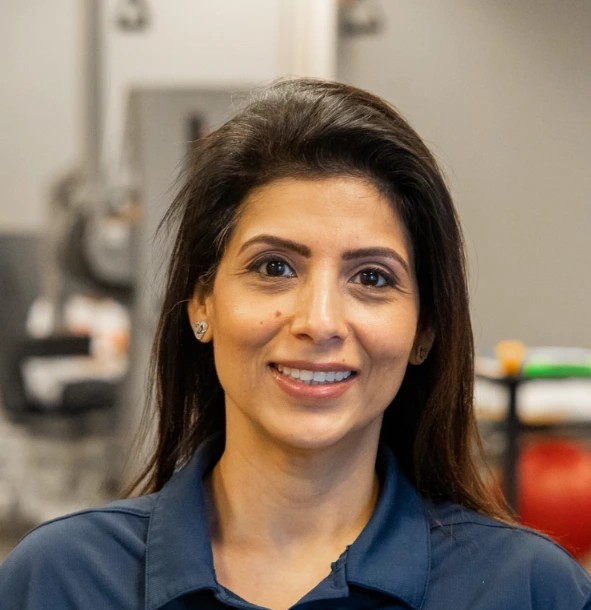
Charu Chopra is a healthcare leader, entrepreneur, and first-generation immigrant who turned uncertainty into opportunity. As a women's specialist physical therapist, clinic director, entrepreneur, she believes that grit, growth, and gratitude can transform anything.
She moved from India to the U.S. in 2007 with determination and a dream. Through hard work and grit, she earned her PT license and went on to transform a struggling clinic into a thriving, award-winning practice. Today, she specializes in pelvic floor and breast rehab therapy and is deeply committed to empowering women — especially women of color — to advocate for their health and leadership.
As a leader, mother of two, and community builder, Charu speaks openly about ambition, cultural identity, balancing family and career, and what it really takes for women of color to rise — not just professionally, but personally as well.