


Opening Doors | Access, Coaching & Building Legacy for Women in Need | Santana Inniss

 Apple Podcasts Apple Podcasts
  YouTube YouTube
  Spotify Spotify
  iHeartRadio iHeartRadio
  Amazon Music Amazon Music
  Overcast Overcast
  Castro Castro
  RSS Feed RSS Feed
  Deezer Deezer
  Gaana Gaana
  PlayerFM PlayerFM
  JioSaavn JioSaavn
  TuneIn TuneIn
  RadioPublic RadioPublic
  Audible Audible
  Castbox Castbox
  Pandora Pandora
  Podcast Addict Podcast Addict
  Spreaker Spreaker
  Podchaser Podchaser
 Santana Inniss walked away from corporate, looked around at the women being left behind, and decided to do something about it. In this episode, the Founder of The Glow Initiative (Glowi) joins Deneen L. Garrett to share how she is ending barriers to professional coaching and what it really means to build a legacy that opens doors for others.
In this episode of Women of Color: An Intimate Conversation, we explore:
-
The Corporate Pivot: The specific decision that shifted Santana from the corporate ladder to social impact leadership.
-
Unlearning Excellence: What it takes to dismantle traditional ideas of who "deserves" high-level support and coaching.
-
Legacy in Real Time: Why closing the access gap is a justice issue and how Santana is building for women she may never meet.
-
The Power of Access: How The Glow Initiative (Glowi) is matching women in hard-to-reach communities with professional resources.
This conversation is for the woman of color who has ever felt like the door was closed—and for the woman ready to be the one who opens it.
Connect with Santana Inniss:
-
Website: glowi.org
-
Guest Profile: Santana’s Full Bio
Connect with Deneen L. Garrett:
-
Join the Dream Lifestyle™ Collective: Join Here
-
Website: deneenlgarrett.com
Produced by: The Leon Thomas Group
Deneen L. Garrett (0:02): What if the reason more women aren't soaring isn't a lack of talent, but a lack of access? Today, we are talking about what it takes to stop waiting for the door to open and how to start being the one who opens doors for others. If you are ready to build your legacy in real time, you are in the right place. Let's go. Hello.
Deneen L. Garrett (0:39): Hello. Hello. And welcome back to Women of Color LIVE, the live version of women of color and intimate conversation, a top 20 women's empowerment podcast. We center and empower women of color. We also have a community for black women 50, the Dream Lifestyle Collective.
Deneen L. Garrett (1:00): Shout out to our production team at the Leon Thomas Group. And announcing today's guest, she is a return guest. She is a podcast alum. We met a few years ago. I had a great conversation, so look it up.
Deneen L. Garrett (1:15): But today we're talking with Santana Ennis. She is a founder and executive director of the GLOW initiative, GLOWE. She's an Afro Latina and social impact builder on a mission to end barriers in access to professional coaching. This month, our conference our focus is highlighting women who build legacy in real time. Santana, welcome to the show.
Unknown Speaker (1:45): Hi. It's so good to be back. Thank you for having me back on.
Deneen L. Garrett (1:49): Oh, absolutely. Thank you for coming back. It's ready to have this conversation, girl. Let's get into it. I'm so excited.
Deneen L. Garrett (1:57): So for those that don't know, Santana is in, Portugal. And so when we first got on the call, she mentioned, oh, I'm in Europe. And I'm like, oh my goodness. I just don't think of Lisbon, Portugal being in in Europe. So that kinda threw me, but she is.
Deneen L. Garrett (2:13): And I know it because I was there back in November, and and we had espresso together.
Unknown Speaker (2:21): So Yes. We did.
Deneen L. Garrett (2:22): Yes. We did. Girl, you tried to get me to walk up some very tall steps. That was not happening.
Santana Ennis (2:29): Yeah. Well, anyone that visits me ends up putting in you know, getting up that step count. So
Deneen L. Garrett (2:37): Yes. Yes. Yes. So that was a good time. So let's go ahead and get into today's conversation.
Deneen L. Garrett (2:42): So who were you before the title, before the credential, before the build, And what was the decision that shifted how you saw yourself as someone built to lead?
Santana Ennis (2:57): There's so much juiciness in that question. So I almost wanna savor it for a moment. Go ahead. I think, know, back in the day when I when I used to send out my speaker bio, it started with the following sentence. My story begins with two parents who were doing their best.
Santana Ennis (3:20): So when I think back to who was I before the titles, right, there's there's my work before Glowy. Obviously, there's there, but there's my life before that work. And I think at my core, what what carries with me from, like, the beginning, is being a person, you know, sort of straddling two worlds, going to school in the nineteen nineties and coming home to, you know, what felt like nineteen forties Panama. Right? It's being Afro Latina.
Santana Ennis (3:55): It's being a a member of two cultures simultaneously. You know, this for me is really a grounding principle for who I think of myself as, but also the way that I move through my work and and why I think, you know, started from the bottom. Now we're here as an ethos. But also just the way that I grew up and the people that I grew up with and seeing, there was so much diversity. And so there was never really the option for me of really believing the myth of the American dream because I think it's a very beautiful myth.
Santana Ennis (4:41): But I think that there are many, many people that work incredibly hard day in and day out. And no matter how hard they work, doors will just not open for them. So who was I before the titles? I was a person witnessing this truth in in reality, in real time that we can hold this beautiful myth, and we can let it pull us forward and light a fire under our spirit, but we can also hold the truth at the same time that there are millions of people doing grueling work day in and day out and having not really much change in their lives. And so what did I have to unlearn to fully step into?
Santana Ennis (5:24): Or maybe before that, you asked about the decision to see myself as someone that was built to lead. I guess I the decision was to do me, you know, I think that a lot of my early career, I had a lot of challenges, of course, being the only brown person, the only woman sometimes in certain rooms. My background was in digital strategy, and so that meant that I was very often the only person in in a room. But I was born with a justice lens that was one of my core values that I came into the world with. And the commentary on fairness and what felt fair and what didn't feel fair, these are conversations that I was having with my mom as a toddler.
Santana Ennis (6:16): And so I had to finally say, ah, okay. You know, this is just who I am. And, you know, the beautiful gift of being multiethnic is that I saw how the world treated my father as a black Latin immigrant, and I saw how the world treated my mother as a white daughter of the revolution. And so I simply just never chose to move through space as if I was lucky to be there. I chose to move through space as if I inherently deserved to be there.
Santana Ennis (6:50): And when I met the friction of people that weren't sure what to do with that energy coming from a woman of color, yeah, I had to decide, ah, okay. This is just gonna be the path for me for better or for worse. And so stepping into really sitting with the call to be in the work that I'm in now and to be leading this work and championing this work, I did have to unlearn, you know, what does it mean to be a founder? Because I think that word has become so loaded. When you think of who a founder is and what a founder looks like, it's generally not this.
Santana Ennis (7:39): Right? I say, you know, I'm the founder and CEO, and, like, that conjures up some images in your mind. And so how glowy and our work began, it was as a grassroots volunteer initiative led by me. Yes. But, you know, with dozens and dozens of volunteers coming up and taking a seat at the table to serve women in need.
Santana Ennis (8:06): But that transition from grassroots to, okay, this is a five zero one c three. This is an organization. This is a formal structure. It's on a mission. I was comfortable playing in the I lead a social impact grass movement, you know, this movement.
Santana Ennis (8:24): I was comfortable in that. Stepping into using the title founder, I had to unlearn all of those associations because those associations felt like they felt like a gate or like bars. The demarcation between who is allowed to lead and who is allowed to start something, grow something, be something, scale something. And I was surprised to learn that I needed to unlearn those associations for myself to really be able to step into what it is that I'm building, to own it and claim it so that I can be present for the legacy as it's being built and not just in hindsight.
Deneen L. Garrett (9:11): So I do wanna pull a few things. So you talked about straddling two worlds. So actually, came to Before I visited Lisbon, I was part of a Facebook group and they were talking about how black was not the same in Lisbon as it would be in The US. And so I started to pay attention to that. And then I started to think, well, what is it like being black globally?
Deneen L. Garrett (9:39): So for you, moving from California, moving to, to Lisbon, and being a multicultural person, person who, as you said, straddling two different worlds, What was your take on that? Is Black Black to you there? Are you seen as Black? Are they more focused on something else? What's your experience around that?
Santana Ennis (10:03): Yeah. That's that's a good question. And, sometimes I'll I'll put it to people this way. And and I think this is a question that anyone anywhere on earth can ask themselves about their country. Is your country primarily racist or primarily classist?
Santana Ennis (10:23): Like, what is the the predominant ist or ism going on in your country? And I think that to its very foundations, The United States is primarily racist. And and how do we know yeah. Okay. Now we're talking about you hear you you had Occupy Wall Street being the first time probably since the golden age, the gilded age rather, that you had a concentrated movement of people speaking out against the idea of billionaires, etcetera.
Santana Ennis (10:58): We're still seeing that today. It's growing eat the rich, blah blah, as an ethos. But what's always been true is racism. And I think that in Portugal, in my lived experience, I and, again, I'm gonna couch this with a huge caveat that it's my lived experience, know, Angolan descent, Mozambican descent, etcetera, who are really presenting as phenotypically black and with skin tones that you would start to see conversations around colorism, etcetera. They primarily experience it as racist.
Santana Ennis (11:40): Although you can counterbalance that experience if you are also wealthy. So there's still a lot of classism influence going on in Portugal. I actually had to confront and then grieve
Unknown Speaker (11:59): Mhmm.
Santana Ennis (11:59): The fact that I am not experienced in Portugal as black. People do not see me as black. And whenever I say, I am a black person. They'll say, oh, but don't worry. No one can tell.
Unknown Speaker (12:20): Okay. Yeah. You were worried.
Santana Ennis (12:24): Well, I'm not. Right? Right. This is just this is just, you know, this is just who I am and how I move in these streets. And so I almost feel because there's so much passing privilege.
Santana Ennis (12:37): Mhmm. Right? These are all really complicated topics. And how I'm experiencing this is maybe not how you experienced. But because I have this passing privilege, I I always choose to introduce myself as black or Afro Latina because white people never claim me.
Santana Ennis (12:57): Although I'm also 50% white, they just don't, you know, they just don't claim me. And so here, it's almost like I I make a concentrated effort because I I I don't want to lose my connection to this part of my being and my culture because here people are choosing not to view me that way. Whereas in The United States, it's kind of ever present. Yes. And I'm curious to hear from your perspective how you experienced that your time in Portugal because it it was a trip to be walking around thinking for three years that there was very little racism only to then be educated that I'm not experiencing it anymore because people here do not view me as black.
Deneen L. Garrett (13:48): Right. Right. No. Very interesting. And so those who are watching, drop WOC in a comment so we know you're out there.
Deneen L. Garrett (13:56): If you're family, drop a heart. If you're a dreamer, drop dreamer. And, of course, we want your questions. So we want to engage with you, so drop those questions. So I'm glad you asked.
Deneen L. Garrett (14:08): It was interesting for me because I remember, being on the top of the bus, on one of those tours, and I saw a woman who to me, I knew she was black walking, lone black woman. And I said, you know what? The way I was looking at her, recognizing and knowing she was black, I I said to myself that, you know what? I'm sure that's how people are seeing me because I'm like the lone black person walking around. And so at that moment, that's how actually, you know what?
Deneen L. Garrett (14:35): I take it back. It wasn't even in, Portugal. It was actually in Mexico City. So, yeah.
Unknown Speaker (14:42): I was gonna say because Lisbon, we have
Deneen L. Garrett (14:44): I know, I know. One place, one place. So as far as my experience as a black woman in Portugal, nothing stood out to me. I just moved through just like I would anywhere else. Hit And different parts of Lisbon as well as I went to Porto.
Deneen L. Garrett (15:02): So I didn't experience anything. I didn't feel like anyone treated me any kind of way as a black person, none of that. And as far as what I read before coming, how people are like, oh, no, they more so identify based on their country of origin. I didn't even experience that either. It was like, no, they were black.
Deneen L. Garrett (15:24): Even the one woman, she's from Cape Verde, she didn't like announce herself as being, oh, I'm from Cape Verde, that was part of our conversation, but it was like, I'm black. And so communicating with people, it was about blackness and it wasn't siloed anyway as saying, no, no, you have to talk to us about being from this or that place. It wasn't that at all for me. However, it kind of formed or planted a seed in my mind to think about that because then, a few months later, I was in Toronto at an event, for black folks, and they said to me, oh, so what do you have going on? Like, okay, of course, black, right?
Deneen L. Garrett (16:07): We already know that, but it looks like you got a little indigenous and some Asian going on. And everyone there did identify based off of where they were from, Bajan, Kenyan, Ugandan, no one said they were Canadian. And so yeah. And so that's when I'm like, okay, wait, there's something to this or something to explore. And so now I'm starting to look at and think about being black globally.
Santana Ennis (16:35): Yeah. When I was at a tech company and was a leader of the ERG for the African diaspora, and we had to specifically name it that way because there are a lot of folks in the world that do not they're black, but they do not use the word black, and they don't identify as black. They might identify as, as you said, their country of origin. They might identify as African or a member of the African diaspora, but there are many people in the world that don't use the word black. And so it was in that context because it was this global tech company where they had employees in 90 countries.
Santana Ennis (17:19): And so the people that were in the ERGs were, you know, often like, why are you always talking about this racism stuff? Like, what is that? You know? Because in in the place that they live, you know, I don't know what it's like to grow up in a majority black country. That's not what my experience was.
Santana Ennis (17:36): But for many people, they may not conceive of themselves using black as a word. Some will capitalize the b. Some don't capitalize the b. And, you know, I think it's just a really interesting conversation not to divide, but to be curious and to explore. Yes.
Santana Ennis (17:58): Because I think the more curious we are about our lived experiences as black people, right, as members of an African diaspora, It's just such a beautiful legacy, and the more that we're curious about the lived experiences of others, just think that's all to the good.
Deneen L. Garrett (18:20): Absolutely. And you know what? And I remember also being at an event and someone mentioned, and they were from one of the islands, and they said they didn't even know they were black until they came to The US, you know, because The US puts people in boxes. And it stayed with me, and it's like, right, because from wherever you know, I don't know if she was from St. Lucia, but it was like, I'm St.
Deneen L. Garrett (18:40): Lucian or, you know Yeah. That type of thing, and that's how people identify. And, like, right now, there's this whole thing on social media about, Yo No Soy, Black, Yo Soy, Dominican. And some people are in an uproar because they're like, I'm not Black, I'm Dominican. And they are Black, Dominicans.
Deneen L. Garrett (18:59): And that's a whole, whole deep, deep thing. The thing is I'm like, I'm not mad at them saying I'm Dominican because that's right. And they kinda do know the Afro Dominican part, the Afro all of that. They do know that, but there's you know, they're they love that they are Dominican. So I don't really have a problem with that.
Deneen L. Garrett (19:22): But when we put people in boxes, we know what box they go in.
Santana Ennis (19:26): We know. You know? And and I think that whenever we're making an effort to put someone in a box, it is an effort to actually categorize ourselves vis a vis their box. Right? Because shit rolls downhill.
Santana Ennis (19:39): Am I higher uphill from you or am I lower downhill from you? And so that's really interesting in The United States being in this body, because sometimes I, you know, wear my hair straight with a blowout, and that throws people for a loop with the what are you and the where are you from and where are your parents from. But, like, no. Really? What about your grandparents?
Santana Ennis (20:02): You know, people get really uncomfortable when they can't clock you
Unknown Speaker (20:06): and put
Santana Ennis (20:06): you in the box to tell them, are they above you to the side of you or are they below you? And I I don't think that's a uniquely American experience, but it is something that I experience really often because people just can't really put their finger on what my ethnic background is unless I name it and claim it. Right. And, you know, and the one thing that I would just say about the thing, bless. Love that journey.
Santana Ennis (20:41): But what I can say from my experience having an Afro Latin family, you know, from Panama, people can they can be racist. Mhmm. And and it is really a really sensitive and complicated reality that immigrants, Afro Latino immigrants that come to The United States experience because they've also been indoctrinated by osmosis through our media, which The US is the primary exporter is media. Right? Our movies, music, culture is consumed around the world.
Santana Ennis (21:26): And that means that when other people view our media and there are racist or sexist tropes and stereotypes being disseminated around the world that also shapes the way that the imagination of who lives in The United States, is formed for people around the world sometimes. And in my family's case, that formed in a very like, hey, we need to distance ourself from this thing because those black people are bad and we're good black people.
Deneen L. Garrett (22:01): Right, right. And you know what, and as we continue talking, I'm reminded, or I'm remembering myself that no, actually I probably do have a problem with it because it goes deeper than that, right? Trying to keep their It's the proximity to the colonizer, and that's what they're saying like, Oh no, I'm not black, I'm this other thing here. So I guess it would be the What's the intent behind you saying that? The Yeah.
Deneen L. Garrett (22:29): Intent is because, oh, you want the proximalization to whiteness? Then yeah, I do have a problem with that. And that's that, right? Because there's a whole
Unknown Speaker (22:39): deep thing with
Deneen L. Garrett (22:40): Dominicans and Asians, you know what I'm saying? Which is so sad. And at this point, I would never go to Dominica to the Doctor for those reasons. But moving away from this. This has been rich
Unknown Speaker (22:52): from this.
Deneen L. Garrett (22:53): Yeah. This has been rich talking about this. Right? Because like I said, I'm now starting to, like, think about things globally, like, okay, how am I showing up? Or not even so much how am I showing up, but how do people who I look at, oh, you're black, in various countries, how do they identify?
Deneen L. Garrett (23:10): And that's something that I'm starting to explore.
Santana Ennis (23:12): And I think it's a beautiful thing to explore. And that's something that really, at least in my experience, it develops through traveling and experiencing other cultures. When you stay in one place forever, and I recognize that there's privilege in saying travel, you know, and there's you know, I recognize that. But if you have the the ability to travel, it is so important to make the decision to. Because when you don't, you don't realize the water and you're a fish.
Santana Ennis (23:46): Right? You just think that's life and the ideas and the thoughts and the values and the mores. You I really could not imagine before I started traveling and living abroad that there were people that viewed issues any differently than and it's crazy to say. I'm thinking of me in my, you know, really early twenties. I was, like, absolutely clueless.
Santana Ennis (24:09): And now living and experiencing and traveling, I've been to 49 countries. It's just like you recognize that the the things that you think are simply the things that you think Mhmm. And that there are 8,300,000,000 beings on this earth that are also thinking things too. And the way that societies form their collective imagination is different in every place that you travel. And when you start operating at that level of curiosity, I think that for me, it has it it's like it's like expanding my my capacity for compassion and empathy and curiosity from, you know, like, a a square, you know, a little like, a postage stamp to, you know, the the Great Plains.
Santana Ennis (25:08): Like, it's just a massive mindset shift when you recognize that people have other thoughts, values, feelings, and you can't assume that they see you the way that you see you. It's incredibly powerful if you couch it that way.
Deneen L. Garrett (25:27): Yeah, absolutely. And so, and even if you talk about travel is a privilege, which it is, we recognize that. So there's also reading, there's watching YouTube videos, listening to podcasts, there's different ways to immerse yourself in other cultures. But bottom I think the message that I wanna take away from this part is get out of your box, out of your square, and learn about other people. Learn and appreciate other people.
Deneen L. Garrett (25:55): And it just enhances and enriches your life.
Unknown Speaker (25:58): 100%.
Deneen L. Garrett (25:59): Yeah. So we you know, we've talked about we're talking about building, we're talking about, leading, we're talking about legacy. And so you shared with us your background. That's how we got into that conversation. And you also talked about what you're building now through GLOE, being the activist background, you know, what you were learning when you were three and four years old, and how it has shaped who you are today.
Deneen L. Garrett (26:26): So with your experiences, right, moving from The US, moving to Europe, and all the things that we've talked about, how has any of it changed how you define legacy today? While she's thinking, don't forget to drop those questions.
Santana Ennis (26:46): Yeah, drop some questions. Get in the chat peeps. I think that before I moved abroad and started traveling, I I would think of legacy as something for other people. Right? Like, the word legacy kind of brought up ideas in me about, like, wealthy, white, philanthropic families, like, I don't know, the Rothschilds.
Santana Ennis (27:20): And they put their name on a building, and it cost millions of dollars. You know? I went to college. I walked in a lot of rooms that had dead white people names on them. I'll be I'll be honest.
Santana Ennis (27:30): Right? Like, there's a lot of dead white guys with names on college campuses, and that was how I always thought of legacy. I thought of legacy as something that you only have the luxury of considering when you have a massive amount of wealth that you plan to pay forward or, you know, leave to another generation. That's how I thought about the word. You know, similar as the way that I had conceived of the word founder.
Santana Ennis (28:03): For me, it was sort of like these are words for other people. Right. These aren't words for, you know, people like me or people with my background. And so I I think my conception of legacy really started to change when I started to build the glow initiative. For me, I've done a lot of really cool things in my life and my career, but this is one of the this is probably the first time where I feel like I am building something that I might conceive of as my life's work.
Santana Ennis (28:37): It's how I feel about this. And that's a really, you know, interesting sort of a headspace to enter and not that I have aspirations for GLOWI to scale to the moon and scale for scale's sake. But we know through lots of data and analysis that when you invest in woman women, that investment is not hoarded. Right? That wealth is divvied out to all of the people around her, her children, her broader family, her community, and out through the societal level.
Santana Ennis (29:19): And so the fact that I am alive and every time I am able to run a new cohort through and match more women with access to a type of support that can unlock something either in in her present or for future generations, I am aware that it is a legacy that I build. It is living and that this legacy that I build that lives is also contributing to just a very small, you know, it could be a punctuation mark, but it's a punctuation mark in the legacies of many, many, many, many, many other people, women, and the impacts that they have beyond themselves. And so that sort of shifted a bit my perspective and, you know, that wasn't necessarily because of living abroad. I think it was more getting older and maybe starting to think about it in this way. I'm not that old, but I do use a retinol.
Santana Ennis (30:37): So maybe y'all can't tell, like, what I'm working with over here.
Unknown Speaker (30:44): Because you got the sun glow coming through the window.
Santana Ennis (30:49): You know? So yeah. I mean and I and I think that that is a mindset shift that folks can can take, like, today no matter how old you are. You can be 15 or you can be 50 or you can be 95. It's not necessarily necessarily about, oh my god.
Santana Ennis (31:05): My life is flashing before my eyes. What do I want people to think about me when I'm gone? People are thinking about you right now, boo. Like, they're thinking about you today. What do you want them to be thinking about you today, and are you living that thing?
Santana Ennis (31:21): I wake up every day and my eyes blink open and I'm like, Oh, what can I do for Chloe today? Like, what's gonna happen? And is It just hits really different when the impact of your work is so proximate and so connected. But also, there's a lot of it that's out of my hands because once that coaching match happens and and, you know, the the cycle runs and the program ends, you know, that I'm I'm walking alongside a very tiny little piece of someone's journey through this work, but it's a part of their journey that is usually pretty impactful. Impactful.
Santana Ennis (32:06): And so, you know, I think that if I had been thinking more intentionally about what sort of mark I wanted to have on the world as a younger person, who knows what I would have done differently, but I am still a young person. I'm gonna claim it. You heard it here first, folks. Absolutely. Young.
Santana Ennis (32:33): I am still a young person, and I I am alive. You know? And I I'd like to feel that my work you know, I think that when we're intentionally thinking about how we want our work to make people feel, how we want to live in our values, When we're thinking that way, we are thinking about legacy. Legacy isn't something that you leave behind exclusively. It's also something that you live.
Santana Ennis (33:10): And if you are alive, you are building the bricks of that story today, not when you die. I don't know.
Deneen L. Garrett (33:24): I mean, yeah. Mean, you said How about that land? What is it to you? And really what I took from it, and you even said a part of this is impact. Legacy Whether is impact, it's a building, because that's impactful, whether it's what you're doing by investing in women who are able to invest in others, and and that just rolls over.
Deneen L. Garrett (33:46): Right? Because, absolutely, when you invest in women, we invest in everybody. Everybody is impacted positively. Yeah. We know that, and and we've talked, you know, outside of this conversation, it is a conversation about the impact that we have, black women especially, that what we have, right, and why there are such so targeted strategic attacks against us.
Deneen L. Garrett (34:13): Right? That's why they're talking. Now you mentioned something, and here we go again, like thinking. So I recently read that what is her name? Shonda Rhimes.
Deneen L. Garrett (34:24): So Shonda Rhimes, she actually donated money to Dartmouth. I believe that's where she went, her alma mater, money for a building. So there's gonna be a building named after a black woman, which I absolutely love. Right? You just talked about dead white men, their names on building.
Deneen L. Garrett (34:43): Right? So now we have a sister who has her name on the building. Now my first thought whenever I see things like this is, oh, would have been nice if that was an HBCU. Right? Or I would have loved it being an HBCU.
Deneen L. Garrett (34:56): However, there's power in it being a PWI, a predominantly white institution. I think Dartmouth is an Ivy League or whatever. Are
Unknown Speaker (35:08): talking about
Unknown Speaker (35:08): around that?
Santana Ennis (35:10): I mean, I think that's really interesting. And, you know, I I I sort of I I speak very sarcastically about white dudes, dead white dudes names on buildings. When someone gives a lot of money and has a a building, it's not like they're I mean, sometimes it is. Sometimes they are literally paying to erect that building. I've seen that happen.
Santana Ennis (35:33): But sometimes they're, you know, they're just taking one name off a building and putting it in. The building is fine structurally. It's doing okay. That money is used for other things. So look.
Santana Ennis (35:44): I mean, I'm I'm black. I went to an Ivy League school. We out here. We're doing it. So, I mean, the the impact, I think, for you know, if I had felt like that space was, like, a little bit more inclusive, I can imagine feeling I can imagine feeling like, okay.
Santana Ennis (36:06): I see you. We are out here. You know? So I can't I I don't I don't really have a comment on on Shonda Rhimes making that choice. I mean, if that's her Alma, I think we all feel some kind of special way about well, maybe not everybody, but I feel some kind of way.
Santana Ennis (36:24): And, you know, I still feel like, you know, my my Alma makes me angry sometimes, and they make me like, what are you doing? You know? They I so I still feel connected to it. I feel like I'm a member of that community. I am a vested stakeholder in that.
Santana Ennis (36:44): And when they're fucking up, I have a comment. You know? I get an email. I'm like, reply. Hello, dean of students.
Santana Ennis (36:51): Let me tell you what I think about what you just said. You know? Because I think that taking up space, you know, it's it's we have to move beyond and I I don't mean broadly. I mean me. This is, like, work in my life of moving beyond, like, okay.
Santana Ennis (37:11): They have allowed me to enter this space. Screw that. I belong everywhere I choose to be. And so if I, you know, choose to go to this school, I belong there.
Unknown Speaker (37:23): Mhmm.
Santana Ennis (37:23): And if you wanna transact in some shared Dululu, which tells you that because you're you have a little less melanin than me that I don't, that's your Dululu. Do that over there. So, you know, I think that for Shonda Rhimes to want to have her name on a building, you know, I I can't foresee me ever wanting to have my name on a building. It feels a little odd to me, But I know that when people are at a certain level of wealth, that is something they concern themselves with. And for some people, this is how they conceive of legacy.
Santana Ennis (37:59): And if that's how she conceives of legacy, then go off, sis. Live your best life. Put your name on a building. I don't know what they did with that money if that endowed some kind of spots scholarship for, you know, writers or creatives or black create I don't know what it it did. I I don't know anything on it, but, you know, I don't think that I guess what I wanna say is I I don't want to I don't wanna be over critical of like, you know, I think we can kill our darlings a lot.
Santana Ennis (38:42): Sometimes in ways that we shouldn't. And then in some ways that we should, we don't in in the black, you know, community larger largely in The United States. And we don't have to get into that latter category because this is a positive podcast. But I think that if we're policing how, you know, the the ones that get to the really tippy top of the American experience and we're we're I I don't wanna shade Shonda. Could it have been
Unknown Speaker (39:14): You know what? It's basically
Santana Ennis (39:15): not used in HBCU. I'm sure it could have been really well used in a HBCU. But, you know, that's not where she went. So I I Right. Mean So, It's
Deneen L. Garrett (39:27): less about her and it's and what I and actually what I'm trying to get at, the significance of her name, a black woman's name, being in in a PWI? That's really the question about that. Less about her
Unknown Speaker (39:43): because I I'm in think it's a incredible. Yeah.
Unknown Speaker (39:45): That part.
Santana Ennis (39:46): I think it's incredible because I don't think there were any names of black peoples on buildings when I when I was in undergrad. And it was so outside the realm of imagination that I I can't even speak with great authority on it because I literally assume that they were all white, white, you know, white names, usually men. And at the tail end of my collegiate experience, there was a building named, and it had a man's name and his wife's name. So it was like the blah blah a and blah blah b blah blah building. You know?
Santana Ennis (40:24): So it's very rare that there's women's names on buildings. It's very, very rare that there's a black person's name on a building. And so can you just imagine a 18 17, 18 year old little black girl stepping foot on Dartmouth count campus for the first time, not seeing a whole bunch of people that look like her, and then looking up and seeing the Shonda Rhimes Auditorium, blah blah blah, whatever the building is? Yes. That is incredible.
Unknown Speaker (40:54): Yes. That is That
Santana Ennis (40:57): type of representation. God. I just when it happens it's happened a few times in my life because, of course, we have poor representation for black people broadly. I think in The United States in media, we could say, I think specifically for women. And then when we start looking at events intersections of that, It was very, very until very, very recently that I started to see people having conversations about the experience of being biracial.
Santana Ennis (41:34): There's a fly. Sorry. Of being biracial and or being the child of an immigrant and not speaking Spanish fluently. Like, these are conversations that have just started to pop off in the media. And when I see these conversations or I see biracial women that look like me represented in the media or Afro Latinas or these types of things, there's like this it's probably where white men get all their audacity because there's just something.
Santana Ennis (42:11): It just, like, enters my bloodstream that's like, yes. Go off. So So
Deneen L. Garrett (42:20): that's what that build that's what her name being on that building does. Right? That's what it will do for, young girls and even, you know, boys who are entering Dartmouth and seeing that. So and that is absolutely huge. So that part I love and thankful that she, you know, that she's done that.
Deneen L. Garrett (42:38): So, Santana, the GLOW initiative serves women who can't access professional coaching on their own. What do you wish more women understood about why that gap exists and what it costs us as a community when it does? And hold that thought. We'll be back after this break. Hi.
Deneen L. Garrett (42:57): I'm Deneen L. Garrett, a cultural alchemist who shift shapes culture through storytelling, through writing, through speaking, through my top 20 women's empowerment podcast. And if you're seeing this, you're watching me on women of color live, the live version, the weekly live version of that podcast. I am coming to you to ask you to vote for me. I am in the running to become entrepreneur of impact, and it's gonna take all of us to get me there.
Deneen L. Garrett (43:30): So check this out and stay tuned. Alright. Well, welcome back to women of color live. We are talking about building with purpose and opening doors, locked doors with Santana Ennis. And Santana, let's get back to that question that I asked before break.
Unknown Speaker (43:54): Okay.
Santana Ennis (43:55): So, I mean, I think the thing that I wish more women knew was that the the gap exists, period. Right? The gap exists. And, we saw this in the McKinsey lean in study, which I have some beef with, but they did show that even for I think they pull I I think the sample size was eight or 10,000 folks, men and women working in what I would consider corporate America, which already implies privilege. Right?
Santana Ennis (44:26): At every level of a woman's career, they do not have equitable access to coaching, sponsoring, or mentorship. So, like, the gap exists. If you wanna dive deeper into how and why that gap exists, I think there are some things coming from the coaching industry itself. The majority of coaches do not earn enough money to live. The majority of coaches are women.
Santana Ennis (44:52): Right? So this sort of creates a market that's oversaturated. The prices have to go sky high for someone to be able to afford to live. And so you end up with the average cost of a coaching hour in the unit in North America being $272 an hour according to the ICF. So when you start looking at the fact that even in corporate America where they know the value of coaching and they provide that readily to their executive suite, c suite, and and director level and above.
Santana Ennis (45:31): They provide it more often to, men in those categories than they provide it to women in the same categories. And then you think about the fact $2.72 an hour. $2.72 an hour. If you don't work in corporate America, if you work a trade or you're a stay at home mom or you you got your GED or or or or or or. Right?
Santana Ennis (45:58): Just the financial barrier alone forms a gap in access. We have a wage gap for every intersection of women in The United States getting worse. Latinas, for example, earn 60 something cents to a white man's dollar. So you you have on the one hand, you have a cost barrier, financial barrier that's very real. You also have a structural barrier where you see inequity and access in spaces where coaching services are being provided to staff.
Santana Ennis (46:37): Why does this matter? Why does this matter? Coaching has been studied. It is effective. We know the efficacy of coaching.
Santana Ennis (46:45): And when I say coaching, I'm talking about educated, ethics based, accredited, or certified professional coaching. We know that this has an efficacy. We know that it has the potential to expand your career, improve career trajectory, your leadership, your relational capacity. It has the, the possibility to improve your personal development as well. And then you see coaching go into some niche specialties.
Santana Ennis (47:20): So Glowie has financial coaches. Glowie has grief coaches. So we know that coaching is incredibly effective. We know that women lack access to this. This is recipe for disaster, is it not?
Santana Ennis (47:37): When we know that there is a credible modality out there that has been shown to be effective at improving your career, your financial, your personal trajectory, and then women don't have access to it. That's a problem. And it's a problem that we're not really talking about when we think about who has ready access to this proven modality. So there's a gap that exists by gender. Then there's also a gap that can exist based on other intersections that women may have.
Santana Ennis (48:10): So what I want people to take away is that we're not talking about coaching as like a woo woo, touchy feely, spa day type of a thing. Although, if you like that and that's how you work on yourself, go off queen. I love it for you. No shade. However, we're talking about the difference between a woman being able to successfully negotiate her salary This or has the capacity to change.
Santana Ennis (48:38): Right? We have a lot of breadwinner moms. And if you're in community of color, the percentage of breadwinner moms goes up. Right? So we have women out here that are the primary breadwinners for their families.
Santana Ennis (48:52): The difference between negotiating for twenty, forty, 6,100,000 more in their career trajectory, that compounds significantly over time where a woman may be leaving more than a million dollars on the table in her lifetime without support for negotiating salary or getting to the next level in her career. But Glowie also works with intersections of women that are pretty much structurally barred from lots of areas of support. So we've worked with organizations that provide support services to women who have experienced domestic violence, women who have been the victims of sex trafficking. We've worked with women who have been unhoused, the formerly incarcerated. And so if we can get access to something that the C suite loves, right?
Santana Ennis (49:48): They love coaching. They love a coach. We know they love a coach because they're paying sometimes more than $1,000 an hour to have a single coaching session. So we know that this modality is effective. When we can get this modality into the hands of the people, the women who need it most, as you said earlier, when we invest in women, that pays dividends outwards.
Santana Ennis (50:11): That woman glows outward. She radiates outward as she improves her own life, her own trajectory. That goes for her kids. That goes for any community involvement that she she's active in. It goes to the society level as well.
Santana Ennis (50:27): So that's what I really want people to take away from this time is that a coaching access gap exists. It's structural as well as financial. And that when we remove that barrier, the floodgates open in terms of capacity for women to succeed, to achieve, to go farther, to climb higher.
Deneen L. Garrett (50:48): So kudos to you for creating this, building this to close that gap. But what do you wanna tell the woman who's watching, what do you want her to walk away with and build or stop waiting to start? Right? So the the women that you are, servicing, what message do you have for them?
Santana Ennis (51:08): Well, what I the message that I would have for any woman is if I can build this, you can build something too. I just got really pissed off one day and decided to start because I didn't get access to a coach until I was in my you know, I was already up there. I'd already been VP. I had already reported to a CEO, and then I got access to a coach. So for me, it was too late to salvage that career.
Santana Ennis (51:34): I was burnt out. I was over the edge, and I needed to completely change. And and that's all the coach could support me in understanding is like, hey, queen. You're burnt out, and you need to you need to make moves here. So, you know, if I can go through all of that and recognize, ah, okay.
Santana Ennis (51:54): Even me way up here was never offered access to a professional coach in a professional setting. Like, there's a problem here. And so I saw a problem. It made me angry, and I just started one day on this literal beige couch. I sometimes write about this beige couch.
Santana Ennis (52:12): It's the first time I've ever had a beige couch. Usually, I've gone with millennial gray. Now it's a beige couch. And from this beige couch, I started a movement that has impacted over 500 women. There have been nearly 200 coaches who have donated their time to this work.
Santana Ennis (52:28): We have provided services in kind to 16 nonprofits and foundations, and we have accidentally gone global. So we've coached women on five continents across 17 time zones. So small beginnings. Right? Small beginnings are the way every every every everything starts.
Santana Ennis (52:53): So if you're thinking about starting something, if it pisses you off and you've been thinking about it, you should probably just start that thing. And then what do I want women to know that are out there who want coaching, have heard of coaching? They think it might help them, and they and and and and they don't know where to start or or where to go. Take up space, sis. You deserve this access.
Santana Ennis (53:19): This access should be equitable, and there are organizations like Glowie that are out here trying to get this access to you. There's no direct Glowy competitor. We're out here on our own in this space, but we primarily bring coaching to women through partnership with nonprofits that are already in the community. They've already built trust. They're already bringing really great services to women, and we go in and we expand that access.
Santana Ennis (53:48): So, raise your hand when these opportunities come by. There are so many women who, in their application to receive coaching through Glowie will say something to the effect of, okay. But if there's another woman that needs it more than me, you know, I guess I don't actually need to take this spot. No, queen. Name it and claim it.
Santana Ennis (54:09): Take up space. If it's being offered to you, if there's a service that's out there, take it. Why not? We're doing this work, you know, to bring this access to women. You just gotta do your part and show up and and do that work.
Santana Ennis (54:23): So I guess it's twofold. If I can do it, you can do it. Just start. And then on the flip side of, you know, when you're presented with an opportunity to get some support, take the opportunity to get the support. Because I can tell you there are if we look at men, I don't think they're out here worrying about whether or not their, you know, their brothers in arms are are are gonna get that same access.
Santana Ennis (54:51): This is something that I think often can show up in a way that it prevents women from reaching out and claiming the support once it's been offered. So those are two kind of thoughts that come to mind as I hear that question.
Deneen L. Garrett (55:03): Yeah. And then a third one just to throw out there, which is kinda implied and we've seen it scrolling across. Also, can donate, right, to help what you're doing. So that's the third So you don't wait for permission, you become it. And when you become it, everything rises to meet you.
Deneen L. Garrett (55:21): That's the Dream Lifestyle standard. And if you're ready to live it, join us inside the dream lifestyle collective, a community for black women 50 and up. And we are about strategy, sisterhood, and structure. So before we wrap, what would you like to leave the those who are watching or listening with?
Santana Ennis (55:41): Yeah. Well, you know, GLOE is is is an an opportunity for folks to get involved. Right now, I think there's a lot going on in the world, and I know a lot of people that I speak to feel pretty helpless, and they don't know how they can individually have an impact. Look. I'll be honest with you.
Santana Ennis (56:04): It sounds a little flip when I say if I can do it, you can do it. Starting a nonprofit isn't easy. That might not be your journey. But there are so many nonprofits out there and other grassroots organizations that are rising to meet this very moment. Gloway was started in 2014, because of the moment that we're in.
Santana Ennis (56:25): And so if you can look into your pocketbook, if you have $5, $10, a $100, slide it to an organization that's doing good work. I would love it to come to Glowy because it means we can match even more women and even harder to reach communities with access to professional coaching. But get out there, spread those dollars around because it's these types of organizations like Chloe that are on the ground and doing the work in these times. Thank you
Deneen L. Garrett (56:59): so much for that. So those who are watching or listening, share this with a woman who needs to be reminded that legacy is what you're building right now. Thank you to the Leon Thomas Group for producing us, and we'll be back next Thursday actually, two Thursdays from now, at 1PM eastern with, Kaia James. So until next time. Thank you, Santana Ennis.
Deneen L. Garrett (57:21): I appreciated our conversation and catching up.
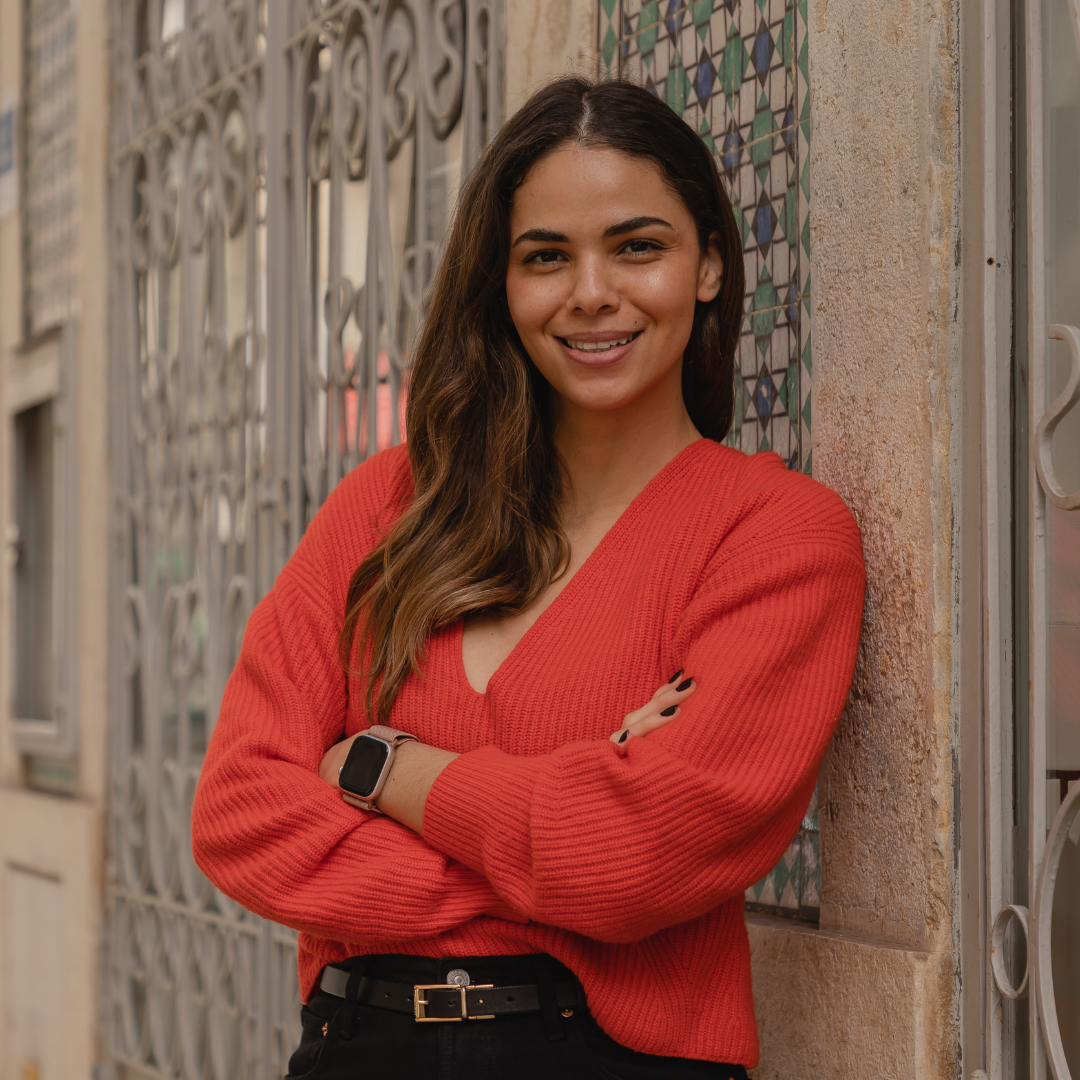
Found & Executive Director, The Glow Initiative (Glowi)
Santana Inniss is the Founder and Executive Director of The Glow Initiative (Glowi), an innovative social impact organization and 501c3 charity on a mission to end barriers in access to professional coaching for women in need and the nonprofits that serve them. As an Afro Latina corporate drop out, Santana understands just how difficult it is for marginalized women to get access to the support they need to soar. She's dedicated to opening doors for women.