


Corporate Leadership & Faith: Violette Omotosho on Building Influence Without Shrinking

 Apple Podcasts Apple Podcasts
  YouTube YouTube
  Spotify Spotify
  iHeartRadio iHeartRadio
  Amazon Music Amazon Music
  Overcast Overcast
  Castro Castro
  RSS Feed RSS Feed
  Deezer Deezer
  Gaana Gaana
  PlayerFM PlayerFM
  JioSaavn JioSaavn
  TuneIn TuneIn
  RadioPublic RadioPublic
  Audible Audible
  Castbox Castbox
  Pandora Pandora
  Podcast Addict Podcast Addict
  Spreaker Spreaker
  Podchaser Podchaser
 "She didn't shrink to fit the room. She expanded what the room could hold."
In the third installment of our May series, She Who Mothers: Redefining Legacy, Love & Lineage, host Deneen L. Garrett sits down with Violette Omotosho — Senior Relationship Manager, Pastoral Leader, Speaker, and Writer — to explore what it means to lead with your full self intact.
For over 15 years, Violette has navigated the intersection of faith, corporate leadership, and cultural identity — without leaving any part of herself behind. In a world that asks Women of Color to shrink, code-switch, and compartmentalize, she is proof that excellence and wholeness are not in conflict. They are the foundation.
Inside the Episode:
- Leading with faith and cultural identity in corporate spaces
- Why compartmentalizing yourself creates its own kind of exhaustion
- How to build influence without compromising who you are
- What it means to mother a legacy that extends beyond your career
Full episode notes: https://www.womenofcoloranintimateconversation.com/corporate-leadership-faith/
Connect with Violette Omotosho:
- Guest Profile: https://womenofcoloranintimateconversation.com/guests/violette-omotosho/
- Organization: Financial Services / Pastoral Leadership
Join the Movement: Are you a Black woman 50+ ready for your next chapter? Join the Dream Lifestyle™️ Collective for the strategy, sisterhood, and structure you need to live boldly. Visit: https://www.skool.com/dream-lifestyle-collective-1653/about
Women of Color: An Intimate Conversation is a Top 20 Women's Empowerment Podcast. New episodes every Thursday. Subscribe · Leave a Review · Share with a woman who needs this today.
Produced by: The Leon Thomas Group
Host: Deneen L. Garrett, Cultural Alchemist & Media Architect, Creator & Host, Women of Color: An Intimate Conversation
Official Website → https://deneenlgarrett.comSubscribe → @DeneenLGarrett
WOC Live | May 2026 — She Who Mothers: Redefining Legacy, Love & Lineage
📅 5/7 — Lynelle Baker-Hall | Plan B: Your Guide to Becoming an Expat
📅 5/14 — Muji Bekomson | Empathy & Solidarity in Tech
📅 5/21 — Violette Omotosho | Building Influence Without Shrinking
📅 5/28 — RIMIDI, M.Ed. | Artistic Ownership & The "Late Bloomer"
Deneen L. Garrett (0:31): They say mothering is a biological act. I say it's a strategic one. The intentional act of nurturing a dream and protect protecting a lineage. But how do you protect that lineage when you are navigating corporate spaces that ask you to shrink? Let's go.
Deneen L. Garrett (1:04): Hello, and welcome to Women of Color Live, the live version of women of color, an intimate conversation, a top 20 women's empowerment podcast. We center and empower women of color. We also have a community for black women 50, the Dream Lifestyle Collective. And before we get into things, I wanna shout out our production team at the Leon Thomas Group. So today's guest is Violet Omotosho.
Deneen L. Garrett (1:35): She is a senior relationship manager, corporate leader, pastoral leader, speaker, and writer. And someone I met, not too long ago, actually, I think it was in September, we met at a black enterprise event in Toronto. And so now we are here in front of you all. Violet, welcome to Women of Color.
Unknown Speaker (1:57): Thank you so much, Deneen. So happy to be here. Thanks for having me on the show.
Deneen L. Garrett (2:01): Absolutely. I am so excited to have the conversation because several things have happened since we met at the Black Enterprise Summit. For me at the actually, not the summit, but it was a global event. It was their very first global event and they partnered and decided to have that in Toronto, which is, like I said, where you and I met. And for me, I was able to attend their summit in March as press.
Deneen L. Garrett (2:30): So that's something new, a shift for me. Like, now I add press to my to my resume. So tell me tell us about some things that, you've added to your resume since we spoke, back in September.
Violette Omotosho (2:42): Sure thing. So, when we met back in September, I remember mentioning to you that I'm interested in speaking and kind of sharing a little bit more about what I feel God has laid on my heart to share. And in January of this year, I was invited to be a moderator at an upcoming conference this month in June here in Toronto, and I am so excited about that opportunity. So it is a Christian conference, if you will. It's called Godfidence.
Violette Omotosho (3:12): So talking about just being your authentic Christian self in a corporate setting or in business. And, yeah, so I'm going to be moderating one of the panels. So I'm super excited about that opportunity because it's certainly something that we spoke about in terms of me being able to kind of share, like I said, what God has laid on my heart to share and be a speaker. So, yeah, so I'm excited.
Deneen L. Garrett (3:33): I love that. Congratulations. You are so welcome. You know, what is it? Speak it into existence?
Deneen L. Garrett (3:41): And you
Unknown Speaker (3:41): did that. Honestly, I yes. Literally because out of nowhere, seemingly out of nowhere, but I am so appreciative and grateful. So yes.
Deneen L. Garrett (3:51): Yay. Yay. Yeah. Yeah. Okay.
Deneen L. Garrett (3:53): So for those who are watching, we want you to get engaged with us. So drop your comments in, questions in the comments. If you wanna just drop WOC, drop Dreamer if you're part of the Dream Lifestyle Collective, drop a heart if you're family or friend. We wanna know you're out there and, you know, we wanna be able to shout you out and and again, answer any questions that you have. So please engage with us because we we want to engage with you.
Deneen L. Garrett (4:19): So there's that. Alright. So, Violet, we often think of mothering as a domestic role but you mother your purpose through excellence and faith. How was your fifteen year journey in financial services shaped you, shaped your understanding of what it means to protect your cultural identity while building global influence?
Violette Omotosho (4:44): Wow. So definitely experience is a great teacher. And I think when anyone is starting off their career, it's, you know, people tend to be, especially women of color, tend to be more cautious in terms of showing up as their full selves. We don't want to be too loud or to take up too much space, if I can put it that way. But I find that, through my fifteen year, plus within the financial industry, as well as insurance industry, that, showing up as you are is the only way that you can fully add to whatever it is that you're doing.
Violette Omotosho (5:22): So if I'm shrinking myself, I am not being able to contribute to my fullest potential. So I think what it has taught me is definitely there is value not just for myself to be my authentic self, but even value to the company that I work for, or if you're an entrepreneur in the spaces that you, occupy to just be your authentic and full self, whatever that looks like. I think you're doing yourself a disservice by not showing up, as your full authentic self in any space that you occupy.
Deneen L. Garrett (5:52): Yeah. And I love that you said that because yes, you're absolutely right. You're doing a disservice to yourself. You're doing a disservice to your employer and you're also doing a disservice to those who are watching, whether those are your peers, whether those are children like, you know, you do a lot in a church. It could be your church members.
Deneen L. Garrett (6:10): If you're not showing up authentically, then they feel like they can't as well. So we'll give who we are and we show up that way. We're giving others permission to do the same.
Unknown Speaker (6:21): For sure.
Deneen L. Garrett (6:22): Yeah and so, you know, I I mentioned cultural identity. I mentioned global influence and I also mentioned how we met. And so when we did meet, there's something that I experienced that it was my second time kind of like experiencing that. And it's kind of put me in a space where I want to explore it more. So if you you may or may not recall or may even pay attention, but when we met or when I was meeting people, you know, identified as their I'm not gonna say country of origin.
Deneen L. Garrett (6:55): Right? So again, we in Toronto, you live in the Toronto area and most of the people there also live in the Toronto area. However, when meeting people, they identify, like for an example, someone, you know, his background is from Barbados. So he's Beijing, right? You're from Uganda.
Deneen L. Garrett (7:16): And so, I think there was someone from Kenya. Nobody said I'm Canadian.
Unknown Speaker (7:22): Yeah.
Deneen L. Garrett (7:23): So before I go more into that, talk to me about that because you're in that space and you're one of the ones that say, yeah, I'm from Uganda or my background is Ugandan.
Violette Omotosho (7:36): So I think, Canada is great in the sense that it allows you to remain you know, to keep, to honor your roots. Let me put it like put it that way. And so a lot of people grow up here knowing you know, having cultural awareness of their background. Even if it's three, four generations deep, most people will know, you know, that you know, where they where their origin trace traces from, like what their background is. So I think, when someone asks you, where are you from?
Violette Omotosho (8:07): A lot of people might say, I am Canadian, but my parents are from X, Y, and Z. So you will hear those answers as well. But I do think that the landscape in Toronto, especially that is which is very multicultural, just gives you that space and allows you to be proud of your country of origin and your roots and heritage. And so people take advantage of of being proud from being proud of where they're from. And there's no it doesn't it also is part of their identity, right?
Violette Omotosho (8:37): Even though you've grown up here, your parents may have grown up here, your background is still part of your identity that you carry with you in many instances. And so I think it's just paying homage to to those, you know, that came before you and and the price that they paid when they immigrated to this country because that in and of itself is not an easy journey to do. Leave all familiarity behind to come to a new place, start fresh. You know? And so I think it's just it's a beautiful thing and ability to to be able to do and to know.
Violette Omotosho (9:09): So, yes, I think that's kind of why people, you know, say their country of origin or their parents' country of origin when asked. So, yeah, it's it's kind of a common thing, especially here in Toronto, like I said, which is a very multicultural city.
Deneen L. Garrett (9:24): Absolutely. And you know what? And I experienced the same in in The UK as well. Right? And so I think what you said is really important, you immigrated there.
Deneen L. Garrett (9:35): I think that's the difference as far as from the experience in The United States. We did. Right? We did not. We did not, choose, and so we're disassociated from where we really come from.
Deneen L. Garrett (9:49): We don't know. And at the same event, you know, I walked up to the one table with the guys and they were like, Yeah, so what you got going on? First of all, they did know I was black, so that there is clear. But they were like, Yeah, know, looked like you got some little Asian, some indigenous, and those things. I said, You know what?
Deneen L. Garrett (10:06): Only thing I got for you is my mother's father's from Alabama and her mother was from Georgia. That's all I know, which is it's really sad because that's a common experience with us here, with black folks in The United States that we don't really know that much more. But that key, I think the key is how we got to where we are plays a large, huge role in that. Thank you for mentioning that.
Unknown Speaker (10:33): For sure.
Deneen L. Garrett (10:34): Yeah. All right. So as a mother navigating the high stakes world of financial services, how do you ensure that the excellence you bring to your career is also building a spiritual and cultural foundation for your children?
Violette Omotosho (10:49): Good question. I would say, home, even when I was growing up, there's always a like, we're very much aware of our background. So for instance, my two older boys, they were born in Sweden where I grew up. So as much as I say I'm from Uganda, I actually grew up in Sweden and I moved to Canada as an adult. So I'm also very much Swedish.
Violette Omotosho (11:17): But so just trying to in in my home, always kind of reminding my kids in terms of where I'm from, where my grand where their grandparents are from, and even music, cultural music, shows, the language. Try to just, keep that in at the forefront or as a even if it's in the background, like, it's always there. It doesn't go away because it's part of who I am. When I speak to my mom, I'm not necessarily always speaking English. And so there's always that reminder that, okay, there is another cultural culture present in our home.
Violette Omotosho (11:54): So it's not even in some of the artwork, things like that, like there it's it's it doesn't go unnoticed that there is another culture that is very much present and part of my children's identity. So the way that I show up at work, yes, it's a more definitely more of a professional setting, but it's still I carry my identity where I wherever I go. And so I feel like even at the home, I can even be more so relaxed and authentic. And and so my children get to see that part and and, appreciate that as well. Fun fact, my son is actually traveling to Sweden on his own this summer to visit his grandparents, my parents.
Violette Omotosho (12:35): And so, yeah, so they appreciate even having those unique ties because when somebody would see, you know, a black boy, they wouldn't necessarily they would never think Sweden. Would say that, oh yeah, my grandparents live in Sweden, my aunties live in Sweden. It's a pretty cool conversation to have. So yeah, I think that they appreciate it and they think it's cool.
Deneen L. Garrett (12:56): My god, so that is amazing. You know what, like one of the things that I absolutely love about doing the podcast is that when I'm interacting with the women that I know, I'm always learning something that I had no idea and had no clue, right? I mean, it didn't come up in the conversation, but another element, my goodness.
Violette Omotosho (13:20): Oh gosh. So it was definitely well, I didn't know any difference. Exactly right. But it was very it's it's definitely not as integrated as North America for sure. So part of my reasons for moving to North America was definitely to be in a space that I felt was more welcoming to women of color specifically and also climbing the corporate ladder.
Violette Omotosho (13:41): So I wrote my thesis, at college was women breaking the glass ceiling in the financial industry. So I was very intentional about why I moved here, what I wanted to achieve. And obviously, you know, life happens. Have I broken the glass ceiling? Who knows?
Violette Omotosho (13:58): I don't know. Like, I'm not in the C Suite yet, but you know what I'm saying? But I was very intentional because I felt like that wasn't necessarily possible in Sweden. So I think every country has their challenges in terms, you know, women of color in particular face different challenges and people of colors, you know, at large, whether regardless of gender, I think every country, every nation, you will have different forms of challenges. And so it's kind of finding which ones you are okay with, which ones you feel like you can overcome, where you can have an impact.
Violette Omotosho (14:28): But I kind of just felt for myself that North America was always where my heart wanted to be. Even as a 16 year old in high school, I was just like, nope. I'm moving to North America. Like, I always knew. I always knew.
Unknown Speaker (14:40): And so, yeah, here we are.
Deneen L. Garrett (14:42): No, I mean, I absolutely love that because my question was gonna be, so what took you there? So thank you for answering that before I even asked that. And so, as I mentioned, we center women of color, specifically black women, and we want them to kind of walk away with, what can I do? Like, how can I use this conversation to impact my life? Like what you talked about earlier, wanting to make sure that our conversation or hoping that conversation does impact others.
Deneen L. Garrett (15:12): And like I told you, it already did before we had the conversation, there were people who were chiming in ahead of time, so I know they're gonna chime in, whether they chime in during the lockdown, drop those comments and questions or afterwards, but it is definitely impactful. And again, the layers that are coming out of this, I mean, I'm loving it. And I'm like, my goodness, what do I wanna do next? Maybe I wanna go live in another country for a short period of time or spend more than two or three nights in a country. But yeah, to get to know it a little bit more.
Deneen L. Garrett (15:47): And if I'm not mistaken, next week's guest, I think she's in Denmark. Yeah. Yeah. Yeah.
Violette Omotosho (15:54): Close to Sweden. And I will say I was pretty young when I moved, but I think what I would tell anyone who wants something different for them selves is do it scared. Know it's easier said than done, but and also you don't have to have all the answers. Like when I moved, like I said, I was I think I was a bit naive. I thought it was gonna be a lot easier than it actually ended up being.
Violette Omotosho (16:18): But sometimes not having every step planned out or all the answers is okay. You know, if you, like, trust your gut, trust your instinct, trust what you, what you feel nudged to do. And even if you don't have you can't see the the full, like, the, you know, the whole road map, that's okay. I think it's Martin Luther King who said take the first is it, take the first step or take a leap in faith and the net will appear, something like that. So we don't always have to know what the end result will look like.
Violette Omotosho (16:51): But if we know that our current circumstance is just not it, then we just have to try something else. And, you know, and I think my my other, thing was what's the worst that can happen? If I fall flat on my face, I can go back home. Like, Sweden. I
Unknown Speaker (17:07): don't know.
Unknown Speaker (17:07): Yeah. Sweden as a country is not gonna disappear. So if I come here and everything fails, I can always go back home. Like, it's you know? So Mhmm.
Violette Omotosho (17:16): Yes. Will it be devastating? Yes. Will it be, you know, annoying to relocate? Like but it's at least I tried.
Unknown Speaker (17:23): You know? And here we're still here twenty years later. So
Deneen L. Garrett (17:26): I love that. And you know what? And even if you have to go back, it's not a failure. And I'll tell you a couple of things. One, we talk a lot on here about doing things scared, right?
Deneen L. Garrett (17:36): How I started this podcast six plus years ago, you know, I went ahead and I was I was fearful. I didn't know what it was about. And then I realized, oh, I have a fear of being vulnerable. So once I realized what it was, I called it out and I just Nike'd it and did it. And this was Good Friday of twenty twenty when this podcast launched.
Deneen L. Garrett (17:57): And then for probably two, three years straight, I published an episode every week and I do most of mine with guests. So going from saying, oh, I'm going to, you know, I commit to doing this at least once a month. I did it once a week, right? Because like you said, go ahead and step out there. Step out of your own faith.
Deneen L. Garrett (18:17): Take that first step. The staircase appears. You know what? Build a plane as you're flying. All of that happened for me and those are the things that I was doing and here we are today.
Deneen L. Garrett (18:27): Like I said, plus years later, a top 20 Women's Empowerment Podcast. None of this would have happened had I not just did it.
Unknown Speaker (18:36): Very true. Yes. That that is a lesson. But again, as a parent, because I was a parent when I did it. So now you're also thinking like, well, what's the impact as on my children?
Violette Omotosho (18:48): Because, know, we always wanna put our kids first, but being denying yourself what you feel like you are called to do, you're still doing your children a disservice. Absolutely. You know, you have to show up, you know, as I said, just as your authentic self and full self and just be who and who you are meant to be so that your children can can also see and learn that, yo, if my mom can take this chance, if my mom can, you know, go take, you know, step out on faith, why can't I? So there's even a lesson, you know, for our children in in doing as well and not living scared and fearful. Yes.
Violette Omotosho (19:24): Obviously, having some form of safety would be amazing when you're raising children because you obviously want the best for your kids. But, but some some things, you know, it's the the not doing it is actually a greater cost than trying and and quote unquote failing. So, yeah.
Deneen L. Garrett (19:44): No, absolutely. And then the other part that I wanted to say is sometimes when you do, you you leave home, you move somewhere and then you go back, that's part of the journey. And I experienced that. So for me, live in Detroit, moved to Las Vegas, single mom, son. And when I got there, I learned that my dream job, my dream career was in diversity and inclusion.
Deneen L. Garrett (20:10): So for the next five years or so, I was building the relationships, doing the things, and then I moved So I was in Vegas four years, moved back to Detroit. And then after I was back in Detroit, like a year or so later, I ended up getting promoted into my dream job. And so I did function in my dream job for like five plus years, my last five, six years in corporate. And then this podcast actually grew out of that. So the point is, two, one, sometimes you're called to go away to have an experience and or learn that thing that you're supposed to do and then come back to actually do that thing.
Deneen L. Garrett (20:47): Exactly. And while I was in it, doing a thing like pursuing the role in diversity and inclusion, I took my son, I'm telling him every step of the way, like, here's what I'm doing. This is why you do that. You know, building relationships, building connections, putting in the work, putting in the effort, and I remember the night before I had the interview, I showed him this cartoon. I had someone draw a cartoon of four different scenes that were related to what I was gonna present on the next day.
Deneen L. Garrett (21:13): And my son said, Mom, I guess you're right, you do have to put in the work, the effort. And at the time, my son was probably 10. So he's seeing this and knowing, here are things that you need to do to accomplish. So I was like me saying, hey, guess what? I got that promotion was huge.
Deneen L. Garrett (21:31): Like you said, your kids are watching. You're doing this for them, yourself and them. And I was able to do that for him and share that with him.
Unknown Speaker (21:38): I love that. Yep. They're always watching. Always. The saying do as I do as I, say not as I do doesn't work.
Violette Omotosho (21:47): Like, they do as you do. So definitely, live by exam lead by example. So, yeah.
Deneen L. Garrett (21:54): Absolutely. Yeah. All right. So Violet, for the woman who has spent her career being the pillar for her employer and family, how does she begin building influence and clarity for herself without feeling like she's leaving her responsibilities behind? And hold that thought.
Deneen L. Garrett (22:11): We'll be back after this break. Hello, everybody. It's me, Deneen L. Garrett, a cultural alchemist who shifts shapes culture through storytelling, through writing, through speaking, and through the Dream Lifestyle Collective, which is a community for black women 50 and up. You also know that I have a podcast, women of color and intimate conversation, which is a weekly live on Thursdays at 1PM.
Deneen L. Garrett (22:36): Well, as of Friday, it's official. My journey to become entrepreneur of impact. Good news is I did make it through top five. Again, the bad news is the journey is over. Yes, a bit disappointed that I will not make the cover of Entrepreneur Magazine.
Deneen L. Garrett (22:59): I will not have the one on one coaching with Damon John and of course the 25,000 prize money which was going to be invested into the podcast and the collective. But hey, here's the thing. Those things can still come. They can still happen. It's just that my contest journey is over.
Deneen L. Garrett (23:18): So there's that. So if you're wondering how to back up, first of all, thank you. Thank you. Thank you. Thank you.
Deneen L. Garrett (23:25): Because of you, because of your daily votes, because of your tax deductible donations to gen youth, I did make it through to top five. So, you know, let me go ahead and celebrate that. Let's clap it up for that. Now wondering how you can still support me? Multiple ways.
Deneen L. Garrett (23:44): Watch and subscribe to my YouTube channel. Subscribe and listen to the podcast. If you are a black woman 50 and up, join the collective. And if you are a business looking to sponsor, hit me up. So just getting started.
Unknown Speaker (23:58): Just one part of a journey has ended. It's only, open space for this next part. So again, thank you. Thank you. Thank you.
Deneen L. Garrett (24:08): Alright. Well, welcome back to Women of Color LIVE. We are talking global citizenship and intentional lineage with Violet Omotosho. And before we go back to the question, I just wanna, shout out. We have a a comment.
Deneen L. Garrett (24:22): Hey, Julissa. Thank you so much. She wrote great conversation. Take take a leap of faith scare. So that resonated with her as I'm sure it resonated with so many others.
Deneen L. Garrett (24:34): So thank you Julissa for engaging with us. Yay. Alright. So, Violet, before the break, I asked about building influence for yourself while staying present for your responsibilities. How do we move from shrinking in our roles to leading with excellence and joy?
Unknown Speaker (24:56): Oh, so I find that, you know, what we do as a career is isn't doesn't define who we are as as people. There's always some that we we have there's so much more to us. Like, we are layered individuals. And so what we do is one thing. Parenting is isn't was one thing.
Violette Omotosho (25:13): But even so whatever it is that brings you personal joy that defines who you are is what will allow you to shine. So for me, that's writing. For me, that was expressing myself and specifically supporting black women online. And so that is kind of why I started my blog. I've had a number of different iterations of my blog, but that's kind of how I was intentional about carving out time to just kind of express what I enjoyed doing.
Violette Omotosho (25:41): And I find that that doing something like that, doing whatever you love, and being intentional about setting aside time. Because someone who's working full time, somebody who you know, a parent, Time is scarce, but I think we have to be intentional about how we spend our time to make sure that those things that matter to us that make us come alive, that we do those things. And and that will actually impact now how you show up in other spaces. So, yes, I can't necessarily write about all whatever it is that I, you know, I'm passionate about at work. You know, it's definitely much you know, very much finance and, insurance related, but that doesn't mean that, the other parts of me have disappeared or anything like that.
Violette Omotosho (26:24): So you still need to nurture those other things that God has laid in you as well. And I think that that is how you now it it helps you, supports supports you to show up in other spaces knowing that you are fulfilling your purpose. Right? So for instance, you have this podcast. I mean, if somebody else, feels called to start a podcast, even if you're working full time, I mean, it's possible.
Violette Omotosho (26:49): I think we we give ourselves too many excuses sometimes, and it's actually fear, masked as as, excuses why we can't do this and that. I don't have time, and I'm too busy and x y and z. But if we just honor what we are called to do and what we're passionate about, I think that that will help us stand tall in other areas that we show up in as well. So, being intentional with your time, I would say.
Deneen L. Garrett (27:16): Yeah. And you know what? And it does start with you and it starts with you finding out, well, what do I love? What brings me joy? And that was part of what So when I retire, I'm like, you know what?
Deneen L. Garrett (27:26): Backing up the beginning of that year, which was 2022, I decided that my focus for the year was going to be living a dream lifestyle. And so you individually define what a dream lifestyle is for you. And so I started for me, it was travel. It was going to events. Later, I added art to that.
Deneen L. Garrett (27:47): So for me to travel internationally, to attend an art event, I'm in heaven. Right? That that's just joy for me. I love it. I love it.
Deneen L. Garrett (27:57): So again, what living a dream lifestyle for you and the next person is going to be different and it's fine but the point is learn what that is and then start tapping into it now. So, even though you're working a full time job or whatever it is you're doing, whether you're raising your kids full time, find that thing and start doing more of it. And here's another thing too, like you said, you're, you know, different iterations of your, blog. Yes, you will have different iterations of your dream life. Like I said, for me, it was travel and events and then it also we added art to that, right?
Deneen L. Garrett (28:34): And then for me to do all three is is huge and it could be just totally different. It could be like I may decide that you know what? I don't really care about going to events anymore and and that's cool. We change. Totally okay.
Deneen L. Garrett (28:48): Okay. With changing but the point is is to, you know, go ahead and make a decision as to, okay, this is what really brings me joy. Let me start tapping into it and then it will start to look different and do not wait. Do not wait and think that, I'm going to do it when I retire. No, no, no, no.
Deneen L. Garrett (29:06): You know, and I mean, life is life. One, you know, to retirement. You may make it to retirement and then for whatever reason, you're not able to do those things that you really want to do. So, you have to start living today and that
Violette Omotosho (29:23): because tomorrow is not promised to anyone, right? And and there will always be, you know, an excuse. There'll always be a reason why, well, this isn't the perfect or most ideal time. But, you know, we if it's a passion, if it brings you joy, you deserve, like, you deserve that. So don't postpone your joy.
Violette Omotosho (29:42): And I remember when I first moved to Canada as well, I was telling myself, oh, when I have my car, I'll do this. And when I have my house, I'll do that. And I'll be happy when. I'll be happy when. You know?
Violette Omotosho (29:52): But you're postponing your joy. And even if you don't have the means or the all the all the pieces in place to, quote, unquote, you know, make you what you think will make you happy, start with what you have. Right? So for instance, for you, it was traveling internationally. Okay.
Violette Omotosho (30:07): Well, even if I can't make it to Australia tomorrow, where can I make it to? Canada is literally I can take a train to Canada. It's inter you know what I'm saying? Like, so start with where you are and and find a way to make that you know, bring that joy to your life. Because if we postpone our joy, we'll be postponing it forever.
Violette Omotosho (30:25): Because there's always there's always gonna be something that's, you know, depressing or important. So I I think that you just have to find ways to bring that joy to yourself because you deserve it. So why why postpone it?
Deneen L. Garrett (30:36): Absolutely. And then you know what? When you start leaning into those things that do bring you joy, so much opens up for you. Like things will just fall out of the sky. Like I said, we met at a Black Enterprise event.
Deneen L. Garrett (30:47): Who knew? They had no clue at that time that I would show up at their summit as press. Who knew that? Knew? But I backed myself up to it.
Unknown Speaker (30:55): I said yes to it.
Unknown Speaker (30:57): Yeah, I love that.
Deneen L. Garrett (30:59): Yeah. And so I wanna kinda circle back to something because when we did meet, you were so happy to have that space, right? The Black Enterprise event, Black Enterprise is a magazine that's focused and centers Black folks, right? And so we were in that space. Have you found more spaces that center Black folks since then?
Violette Omotosho (31:22): So not there are some there there are a few events that take place in Toronto where there, there's one called Be Future. It's more tech focused, and one of the panelists on the black enterprise event, he's actually the founder of the Be Future Conference. So there are few far and few between events that center around people of color and black people in particular, but they're not there's not a lot of them. So compared to America where there's a lot of different conferences, a lot of different events. And and what I love about these two in particular is that it's more of a professional setting for black people.
Violette Omotosho (31:59): So, yes, you can find areas and spaces that center around black people, but it's more party. You know? It's more, you know, chill vibes. But the professional settings, you won't find a lot of them that center around black people. So when these events come up, like, I will do anything to be there.
Unknown Speaker (32:15): Because I just love this black excellence. Yeah. Like, I get high off of black excellence. I love it. I I I love it.
Unknown Speaker (32:22): So I see being in that in those spaces impacts me as well to to see, okay. You know what? I can do this. I can I can do that if they've been able to do this? Like, it just it's positive energy.
Unknown Speaker (32:33): It's just I I Mhmm.
Unknown Speaker (32:35): Love it.
Violette Omotosho (32:36): So I have a few other places. The one, the Be Future conference, which was in November, a couple of months after, But that's about it. But, you know, I think there's more. Hopefully, there will be more coming up. Like I said, they do have a conference, a more Christian a Godfidence conference coming up as well this summer.
Violette Omotosho (32:54): So that it's not necessarily black focused, but more Christian focused. But, yeah, hopefully, we'll get more black centered professional events here in Toronto. Similar.
Deneen L. Garrett (33:06): Yeah. So do put on your calendar to attend the Black Enterprise Women of Power Summit for It's in March 2027. So put that on your calendar, like whatever you need to do, block that time off because you want to be in that room with thousands of Black women, thousands of professional Black women. That is definitely a space to go to and build those relationships, build those connections, start doing it in advance, you know, look at go online and and look for speaking opportunities like submit a panel or whatever you can potentially around speaking, talk to your company and see if they would even sponsor you to go. I think Manulife was there.
Deneen L. Garrett (33:49): Yes. They were a sponsor, right? So that's who hosted the global event. So your connections there, whatever, but do what you need to do so that you're in that space next year.
Unknown Speaker (34:00): For sure, know I will, definitely.
Deneen L. Garrett (34:03): All right, so how do you navigate the conversation of values with your children? And that's something that we were kind of talking about before we went live. So we were talking to our producer and we were talking about how we were raised versus how we're raising our children, so on and so forth. And that's probably gonna be a series down the line because lots to talk about around that. And then how do you become the permission for your family to think bigger?
Violette Omotosho (34:33): Okay, so for values, that's that's I think we kind of just have to express what we as parents deem valuable to our children. I think that they will still ultimately, have their own definition. My 14 year old, you know, video games, that is bible to him. Like, he values his video games, a whole a lot. But, it's it's kind of just, emphasizing, you know, okay.
Violette Omotosho (35:03): So there's what you enjoy to do, but there's also what truly, like you know, he at the end of the day, he's a great kid. Like, he's very compassionate and and an empath. And so encouraging and and, calling out when you see that they, are embodying the values that we as a family hold dear. I think that that is is is very important so that they acknowledge so that they realize, oh, okay. This what I did here isn't I should take a moment to actually, appreciate that I I I possess this ability, that I have these values and and not let anybody else tell me otherwise.
Violette Omotosho (35:42): Because, you know, what we teach at home and what what they will teach you out on the streets or in school might not always be the same. So kind of just honing in on what we value, what our values are here at home. And, hopefully, you know, at the end of the day, it's only by God's grace that they will kind of carry that with them where where they go. So, I think that definitely, honestly, also pray over your kids. Because as much as we do as parents, at the end of the day, we just have to thank God that they all make it home every night and and, you know, that they can be and flourish in in in in their careers, in their school, and etcetera, and so on and so forth.
Unknown Speaker (36:21): But, yeah. So that was the there was another part to your question. Sorry. There was a And
Deneen L. Garrett (36:25): you know what? And the other part of the question is one that you've already expressed. And so the question that I asked is how do you become the permission for your family to think bigger? And I would say the one thing that you share with us, which is huge, and if you did nothing else, making that move from Sweden to Canada. That right there was giving your family permission to think bigger.
Deneen L. Garrett (36:48): But how else are you giving your family permission?
Violette Omotosho (36:51): And I think and I'll even kind of put context around me moving to Canada. My my parents, right, they grew up in Uganda, and they packed up and left their familiarity and moved to Sweden. Right? So I think maybe it's something, you know, them doing that showed me that, you know what? It's okay to to leave home and and move to where you believe your family is going to, flourish and where you yourself as an individual will will flourish.
Violette Omotosho (37:22): And so I think my parents also kind of led by example, and so I've done the same. And that's not to say that my kids will pick pack up and move to another country, but at least it's, allowing I'm giving them the permission to wherever life takes them, wherever their dreams take them, whatever it is that they want to do. You know, me as their parents should not hold them back. I should not be, what prevents them from pursuing what it is that they want to do, whatever that looks like. Even if it's in the same city, it could be a career choice.
Violette Omotosho (37:54): You know, I I posted something the other day on my LinkedIn about people from the African diaspora. A lot of our parents wanted us to be doctors, lawyers, engineers, you know, because those are kind of careers that they hold dear and that they value. But I think allowing your children to be who they are and and be bigger because even if they they end up being, their career is a photographer, right, which traditionally is not necessarily something that an African parent will, you know, be too excited about because, you know, what what is the job security for a photographer? But I think in today's day and age, it's like, you don't know where where that their photography can take them, especially now with social media. Right?
Violette Omotosho (38:38): So just allowing them to kind of explore. And there's so many careers these days that didn't exist twenty years ago because of, technology, because of AI and whatever else, social media. There's so there are job titles that literally did not exist when our parents were young. So if we were to limit our children to, you know, doctor, lawyer, engineer, whatever it is that our grandparents and parents, thought were the, you know, epitome of a of a of a career, we're we are definitely, doing our kids a dis service because, again, we don't know what careers can what job titles will exist ten years from now. So let them explore.
Violette Omotosho (39:17): Let them do and only god knows what where that will take them. Right? And so and even if you're a doctor, lawyer, engineer, job security these days with AI and everything else, nothing's guaranteed. So you might as well do what makes you happy.
Deneen L. Garrett (39:32): Absolutely. No. I fully agree with that. And then where could photography take you? Around the world.
Deneen L. Garrett (39:38): It could be very lucrative. So you're absolutely like, follow what you enjoy because that makes a difference. Like we said earlier, I believe that when you do follow your passion, like the universe, God opens up and conspires and brings those things to you, brings you more opportunity, bring the money and all the things, the security, all the things that because you said yes to yourself and which is so valuable. So I just have to ask this question. Why Toronto in that Detroit or somewhere in The, US?
Violette Omotosho (40:14): Good question. So, I mentioned earlier when and I pre show with the producer that I love the DMV. So I do have family in Maryland. And so US was kind of always the goal actually when I was younger. But then I had children, young, and I was like, okay.
Violette Omotosho (40:30): You know what? Sweden is a country that has free health care and is pretty safe. And so me on my own, I would go anywhere. Like you said, Detroit, LA, anywhere. I I will rough it and make it work.
Unknown Speaker (40:41): But with kids, I was like, okay. I want to still pursue my dream of leaving Sweden, but I still kind of have to take into consideration that I have young ones that might need to see the doctor once in a while. You know? And so I was kind of just trying to be practical in that sense. And I was like, okay.
Violette Omotosho (40:57): So if it's not America, you know, I've never been to Canada, never been to Toronto, but it was kind of my a plan b, if you will, but it just turned out worked out in the sense that I knew this is where I was supposed to be. Yeah. But but it was definitely the closest that I could get to America without being in America. I'll put it like that.
Deneen L. Garrett (41:21): A good choice, especially today's climate. Absolutely a a good, good choice. And then also, again, for women to take away from this, from the conversation is you took in consideration what was best for your family. Okay, what is it that I need? And so when we are doing those things, when we are making those decisions, yeah, we wanna be practical or we wanna think about how does this impact my family?
Deneen L. Garrett (41:47): So you do wanna do that as well. You do wanna do your due diligence before you just pop out somewhere. And if you choose to just pop out somewhere, go for it, do your thing. Right? I
Violette Omotosho (42:00): definitely could have made it work. But I think at the time, was like, okay. You know what? Me moving across the Atlantic Ocean is is big enough. So let me just, you know, try to take some precautions.
Violette Omotosho (42:11): So Canada was me trying to play it safe and have access to free health care. Literally, that is kind of the reason why for the children. I was like, I can be I'll be fine. I'll take Tylenol. I'll be cool.
Violette Omotosho (42:22): But for the kids, I was kinda like, okay. You know what? You know, kids have regular doctor's appointments and all these things that I was just like, okay. Let me just have some and especially growing up in Sweden where it's such a, you know, traditionally socialistic country, Canada is kind of like in between. Like, it's not as socialist as as Sweden, but it's not as, you know, progressive and and, as America.
Violette Omotosho (42:47): But I felt like it was kind of like a a nice a nice mix, if you will. Yeah.
Deneen L. Garrett (42:54): Yeah. Alright. So we've been talking about permission. So what permission does a woman of color need to give herself today to finally stop settling for the status quo and start architecting her values aligned life?
Violette Omotosho (43:09): What permission. Honestly, you don't need like, God has given you what it is that you need. And whatever it is that you feel and think that you don't have yet, you will get on that journey to whatever it is that you are meant to do. So you you don't need permission. Honor yourself, honor your your truth, and and do what it is that you want to do and how you want to show up.
Unknown Speaker (43:40): And and I think yeah. I don't I don't I wouldn't say that you need permission. I think you just need to dare to dream
Unknown Speaker (43:47): Yeah.
Violette Omotosho (43:48): And dare to go for it and and just see where life where that journey takes you because you will definitely you will never be the same. Like you said, we as we mentioned earlier, even if you leave the city that you grew up in and come back, you're not coming back the same version of yourself. So, definitely just honor what it is that you want to do. Like, you don't need permission to be you because God already put you here, and he ordained you to be who you are. And so live in that truth.
Violette Omotosho (44:17): And yeah.
Deneen L. Garrett (44:18): Facts to all of that. So right. You're right. You don't wait for permission. You become it.
Deneen L. Garrett (44:23): And when you become it, everything rises to meet you. And that's the Dream Lifestyle standard. So for those who are watching, listening, if you're ready to live it, join us inside the Dream Lifestyle Collective. We provide the strategy, sisterhood, and structure for black women 50 ready to live their next chapter. So Violet, before we wrap, what is one step a woman can take today to begin mothering her future with clarity and joy?
Violette Omotosho (44:54): Take the time to I think we mentioned it earlier to to find out what it is that brings you joy. I think a lot of times we you know, we're so busy doing and being and running around and and just serving everybody else but ourselves that we don't even know what brings us joy because we're always just giving and pouring into everybody else, our our children, our employer, our boss, our friends. But, like, to take the time to figure out what brings you joy. And once you know what that is, whether it be through journaling, praying, or or however you want to go through that journey of self discovery, take the time to do that. And once you find figure that out, be intentional about giving yourself permission because, again, you you're the only one to give yourself permission to do that, to take the time to enjoy those things in whatever capacity that you can at this present time, and then let that, sow that seed and let it grow.
Violette Omotosho (45:50): And, you know, who knows what that would look like years from now? But definitely self discovery and and being and honoring your your what it is that you discover about yourself by by giving yourself permission to enjoy just that because there's more to us than our careers and and our children. We love both. Both are definitely necessary, you know, put foot on put foot on the table. But you are more than a mother.
Violette Omotosho (46:16): You are more than your profession. So honor that person within that, you were created to be.
Deneen L. Garrett (46:25): Love that. So Violet, Omotosho, thank you so much for joining us today on Women of Color and Intimate Conversation. And I'm sure I'll see you soon, so I'll let you know when I'm making it back to Toronto. But again, let's make sure we see each other in Vegas next year.
Unknown Speaker (46:41): For sure.
Deneen L. Garrett (46:42): And thank you to the Leon Thomas Group for producing us. And next week, we continue the series with Remedy. She is a music artist and educator. Until next time. With VerboCare, help is always ready before, during, and after your stay.
Unknown Speaker (47:19): We've planned for the plot twists so support is always available Because a great trip starts with peace of mind.
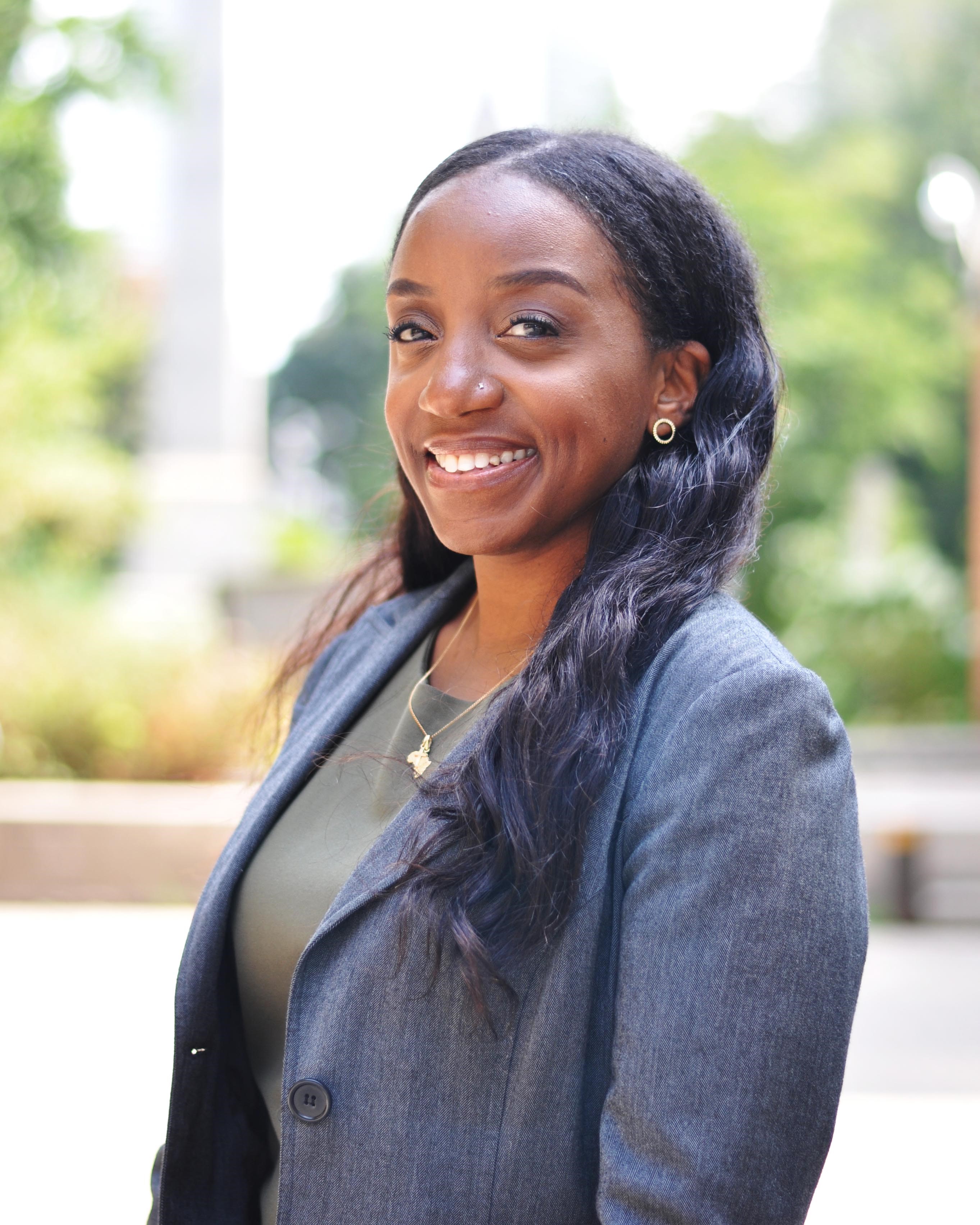
Corporate Leader, Speaker & Writer
Violette Omotosho is a senior relationship manager in financial services, a pastoral leader and an emerging thought leader at the intersection of faith, career, and cultural identity. With over 15 years of experience navigating corporate leadership spaces, she is passionate about helping women of color build influence, confidence, and clarity without shrinking or compromising who they are. Through her work, speaking, and writing, Violette explores what it looks like to pursue purpose, excellence, and joy while living a values-aligned life.