

Anais Disla Cabral: Met Gala Producer on Being Known by Name
How do you go from a temp job at The Met to leading the Met Gala? In this Thanksgiving special, Anais Disla Cabral, founder and CEO of DISLA, shares how starting at the bottom, building real relationships and having the audacity to step into your own name took her from the Met to the Lucas Museum opening to her own studio. If you work behind the scenes and are ready to be known by name, press play.
 Apple Podcasts Apple Podcasts
 YouTube YouTube
 Spotify Spotify
 iHeartRadio iHeartRadio
 Amazon Music Amazon Music
 Overcast Overcast
 Castro Castro
 RSS Feed RSS Feed
 Deezer Deezer
 Gaana Gaana
 PlayerFM PlayerFM
 JioSaavn JioSaavn
 TuneIn TuneIn
 RadioPublic RadioPublic
 Audible Audible
 Castbox Castbox
 Pandora Pandora
 Podcast Addict Podcast Addict
 Spreaker Spreaker
 Podchaser Podchaser
Key Takeaways
- Anais Disla Cabral made history as the first woman of color to lead production of the Met Gala, rising from a temporary role covering maternity leave to senior manager.
- Building a successful career in high-end production requires embracing the grind, which includes starting from the bottom, volunteering, working 16 to 18-hour days, and learning the fundamentals of the industry.
- As the director of special events at the Lucas Museum in 2020, Anais successfully built the institution's event program and vision from scratch during a uniquely challenging time.
- Authentic professional relationships must never be transactional, and true career longevity comes from being known by name for your integrity and exceptional work ethic.
- Stepping into your power requires the audacity to own who you are and build your vision on your own terms, exemplified by Anais founding her strategy and production studio, DISLA.
For this special Thanksgiving episode of Women of Color: An Intimate Conversation, host Deneen L. Garrett honors the women behind the moments with Anais Disla Cabral, proud Afro-Latina and founder and CEO of DISLA, a strategy and production studio for cultural institutions and purpose-led brands. The first woman of color to lead production of the Met Gala, Anais shares how she rose from temp to leading the team, what it took to build the Lucas Museum's event program from scratch, and why she is stepping into the spotlight.
Anais started at the Met as a temp covering a maternity leave and rose from coordinator to manager to senior manager before leading the team, producing the Camp Met Gala. She then became the Lucas Museum's director of special events in 2020, where she established its event program and built the vision for its opening events. She founded DISLA, and her first project was leading the reopening events of the Studio Museum in Harlem.
In This Episode
- From temp to leading the team: how Anais worked her way up at the Met and what it took to lead the Met Gala
- Why she says start from the bottom: volunteering, 16 to 18 hour days, and learning the ABCs of your industry
- Building the Lucas Museum's event program from scratch, and what its opening taught her about vision and commitment
- Why she named her studio DISLA, and the freedom of building on her own terms
- Why relationships can't be transactional, and what it means to be known by name
- The one step to take today: have the audacity to step into who you are, plus who she is grateful for this Thanksgiving
Connect with Anais
- Website: dislaprojects.com
- Guest Profile: womenofcoloranintimateconversation.com/guests/anais-disla-cabral/
Join the Movement
The Dream Lifestyle® Collective is our weekly newsletter for Black women 50+ who are ready to dream boldly, decide intentionally, and drive their vision → deneenlgarrett.com
Subscribe · Leave a Review · Share with a woman who needs this today.
Women of Color: An Intimate Conversation
Hosted by Deneen L. Garrett, Cultural Alchemist · Media Architect
A Top 5% of 4M+ Podcasts · Now streaming on In The Black Network and AfroLandTV
Everything in one place: deneenlgarrett.com
"Through story, we shift culture. Through sisterhood, we rise."
Year-End Lives
- Nov 26 — Anais Disla Cabral: Thanksgiving Special (this episode)
- Dec 3 — Camille Jackson: Building Sacred Ground
- Dec 10 — Charlene A. Berry: Taming the Big 3
- Dec 17 — Felicia Leatherwood: Root Therapy (final Live of 2026)
- Returning January 7, 2027
Frequently Asked Questions
Who is Anais Disla Cabral?
Anais Disla Cabral is a proud Afro-Latina, founder and CEO of DISLA, and a renowned producer who made history as the first woman of color to lead production for the Met Gala.
How did Anais Disla Cabral start her career at the Met?
Anais originally started at The Metropolitan Museum of Art as a temporary worker covering a maternity leave. Through dedication and hard work, she rose from coordinator to manager, senior manager, and eventually led the production of the Camp Met Gala.
What is DISLA?
DISLA is a strategy and production studio founded by Anais Disla Cabral that works with cultural institutions and purpose-led brands, with notable projects including the reopening events of the Studio Museum in Harlem.
What advice does Anais Disla Cabral share for building a career in production?
Anais advises starting from the bottom, embracing long hours like 16 to 18-hour days, learning every detail of your industry, and cultivating genuine, non-transactional relationships so you are known by name.
Three of the biggest nights in culture and the woman behind all three has never been the one in the spotlight. What happens when she steps into it? Today we find out. Let's go. Welcome to Women of Color: An Intimate Conversation. I'm Deneen L. Garrett, the creator and host of this Top 5% podcast worldwide. We center and empower women of color. We also have a free newsletter built specifically for Black women 50 plus the Dream Lifestyle® Collective. Shout out to our production team at the Leon Thomas Group and specifically Oryne Stewart Sr. who keeps us together every week. Today's guest is Anais Disla Cabral, proud Afro-Latina, founder and CEO of DISLA, a strategy and production studio for cultural institutions and purpose-led brands. For this special Thanksgiving episode, we honor the women behind the moments and what it takes to finally be known by name. Anais, welcome to the show. Hi, thank you so much for having me. So excited to chat with you today. Yes, I am so happy to have you here. So let's get into it.
You were the first woman of color to lead production for The Met. What did it take to earn that seat? You know, it was consistency and just building over time. I did not start leading the Met Gala from the beginning. I really worked my way up there. I actually started the Met as a temp employee covering for somebody during maternity leave. I was blessed to be able to stay and get a full-time job. I built myself up from coordinator to manager to senior manager and then finally leading the team at the end.
That time really allowed me to build those relationships, understand the institution from the inside out, and get everybody's trust to be able to really lead one of the country's biggest red carpet events. That really set me up and it's the foundation that has shaped so many experiences after that. I love that. I love that you climb the ranks, if you will. I love whenever someone is at a place and they can see how they can get to the next level. That's always a great thing to see that.
It is. I think it's so important for you to understand the ins and outs of your industry always. Starting from that entry level position and working your way up really just allows you to do that and just build on to the experience. Yes, and then starting from temp. That's a story because as I said, the podcast is about empowering women. So to have examples of starting here and then moving up and then what you did beyond is so amazing and it's empowering.
So thank you for that. We appreciate your journey. For those who are watching, tap in. Let us know you're out there. Drop something in the comments. We love to engage with our audience. And so after 20 years inside the Met, you built DISLA on your own. What did this allow that you could only build outside of the institution? Really, it was about freedom. You know, after working with so many amazing cultural institutions, you know, I have the opportunity now to decide what projects I want to work on, what organizations and companies I want to work with, how I want to be able to build that.
And, you know, just again, it's all about the freedom for me. I've started DISLA because I wanted to build on everything that I've worked and kind of make it my own and fill this gap that I see within cultural institutions where, you know, I could come in, understand what they need and help them build that. With their events, their experiences, but also, you know, revenue generating programs, I think that's so important for cultural institutions and sometimes it's not part of the conversation.
And so I think it's something that I can certainly bring to the table. And honestly, starting DISLA was also just a very personal thing for me. The last couple of years I've had some tremendous loss and it made me reevaluate how I want to work. So many things about life to be quite honest with you. And DISLA really just gives me the freedom to be able to do that and work on things that are challenging, but also super meaningful for me as well.
Yeah. And you mentioned it being personal. And so DISLA is very personal, right? Because you mentioned that that's your maiden name. So why did you choose to name your business DISLA? I chose it. My father passed away a little bit over a year and a half ago. And so he was the OG entrepreneur. He, you know, was an immigrant to this country and built his business from the ground up. And so I wanted to be able to honor that. And that's a beautiful way to honor it.
And I know, you know, that explains how important, you know, making sure that DISLA is kept in the conversation, right? That it's part of your name. And I'm very particular about my name too. So I use my middle initial. So whenever anybody writes the name Garrett, I'm like, no, no, no, no, no. [inaudible] So I fully understand that I fully respect making sure that we honor names, right? Because a name is more than just the name, right? As you mentioned, it's a way of honoring someone.
It's a way of honoring yourself. Our ancestors, it, you know, it honors so many different things. Now, kind of going back to when you were at the Met, did you set out to get to where you were? Or did you kind of like, oh, I just start this temp and I just kind of want to, you know, learn and get my feet wet? At what moment did you decide, you know what? I want to get reached to this level. No, it was definitely a strategic move before the Met.
I was on the vendor side of things. So I was already working in events. I knew it was my thing. I loved it. I was actually working for the in-house event design company at the Waldorf Astoria. And I had other amazing portfolio, including like the Plaza, Gotham Hall, amazing places within New York City and producing events there. But this was the first cultural institution. And so I, through a really good still friend, as she was my manager, recommended me for the job.
And it was definitely a strategic move where for me, it wasn't about, working in a museum necessarily at that moment. It was working at the Met. Like what better place can I, you know, produce events in? And once I got in there and started realizing, you know, what that really meant, it definitely was the strategic move of like, no, I want to stay here and work my way up. The goal was always, you know, I want to become director of a department, you know.
And what better place than, you know, such a iconic institution like the Met. Yeah, absolutely. And I'm thinking, so I mentioned that I traveled to New York often and I was there. I did come and check out, and I call it the dandy, right? The dandy exhibition. Yeah. And that was just amazing to me, not to Black folks, because that's how I saw it. So what was like your last production before you moved on? My last production was the last big production, I should say, was the Camp Met Gala.
And so that was the Met Gala that I produced. Again, I worked on Met Gala for seven years, but that was the first one that I produced and led for the museum. And so that was the last big one, which was, again, just such an important milestone in my career to be able to lead the biggest red carpet production. The biggest red carpet event on the East Coast. Yeah. Yes. And that's so many other people, you know, they try to duplicate, right?
Yeah. They have their own work. It's a template. It is, right? I still hear it. It's like, okay, how can we make this the Met Gala? Absolutely, absolutely. And we experienced that here in Detroit. So I am in Detroit and I actually, I volunteer at the Detroit Institute of Art. And so we have something called a FashBash. And I think a lot of people kind of refer to that as they're, it's a fundraiser. And it's their version of a Met Gala.
So shouting them out. So, you know, still thinking about business. And again, like I said, we empower women and we want them to kind of have tools. We want them to have like specific examples or to be able to see, okay, how do I, you know, create my roadmap around this thing for someone who's interested in events and they're interested in the operations and strategic side of it. What would you recommend for them? Like, where should they start? Start from the bottom.
I think going back to how I started as a temp and even before that I interned for years and I would volunteer for events. I would, you know, trek into the city for free, you know, work 16, 18 hour days. Sometimes it wasn't work as volunteering. It was free. But I learned so much. I learned so much on the floor. And there's so much that that experience just means so much. You could talk to people day in and day out, but until you're on the floor and you're experiencing that for yourself, you know, it doesn't necessarily click.
And so I think it's important to understand every aspect of your industry and of your job. So I think, you know, I sometimes interview so many people and they're just like, you know, interviewing for, they're just out of college and interviewing for like a VP position. And I'm like, time out. I don't think you really actually understand what that means. And if you don't understand the ABCs of events in your industry, like you're not going to succeed in these higher level positions.
And so yes, definitely that should be the goal. But I think sometimes you need to just take a step back and work your way into that so that you truly, truly gain that experience and fulfill the shoes, you know. Absolutely. I mean, there are some jobs where you might be able to skip some steps, but it sounds like this is not one right. You need to learn that, you know, these levels before you get to that VP. So that's truly understandable.
And so, you know, again, you went from working at the Met and then to moving on to this. What was like that pivotal moment that said, you know what, it's time for me to do my own. I got this amazing opportunity to interview for the Lucas Museum and they were doing something completely different. You know, the Met was amazing, but the Lucas gave me the opportunity to start something from scratch. And I started as their director of special events back in 2020.
And, you know, you think about if I were to have started this I would have done X, Y and Z different and the Lucas Museum gave me that opportunity where I was able to establish their event program. What did it mean for external organizations and companies to rent the museum, establish pricing policies, work with vendors and build a team that I trust working within the institution. And of course, then build out the vision for for opening events, which is a huge thing for us.
Yes. And so I want to know more about your experience with the Lucas Museum. So we'll get to that after this break. [Break] Welcome back to Women of Color: An Intimate Conversation. Today we're talking about building the moments the world remembers and the woman behind the stage with Anais Disla Cabral. Anais, before the break I asked what did she learn from working on the Lucas Museum opening. You know, one of the major things that I worked that I learned and working for the Lucas Museum opening was just, you know, the power of having a clear vision and staying committed to bringing it to life.
When you think about what it takes to build an institution, it's really extraordinary and you're not just opening up a building you're creating something that will have an impact in generations to come. And so something that I really admire is the level of vision, ambition and intention that it took and having the courage to think big and staying true to your vision and surrounding yourself with the right people to make that happen. You know, opening night was just one night, but it was really years of work.
You know, the institution broke ground in 2018. They were having conversations years before that. And so again, commitment and vision that it took to get there was just really extraordinary. Yeah. And so that was an eight year journey. Wow. You know, people don't really, we see the end product and we don't necessarily think about what it took to get there. And you were telling me, yeah, I started with them and I'm like, wait a minute, I didn't know it was a museum back then.
We were like preparing them like, oh wow, which explains why how you said earlier, you can't necessarily skip steps in this business, right? You have to start somewhere and learn if you want to be, you know, pretty much an expert or have an expertise in your craft, you need to know the ins and out of your crafts. And so again, you know, being able to pivot to this starting something from the ground up. I love that as well. I've had opportunities to wear as like either you step into like somebody else's role and pick up from there or you start fresh.
And I do prefer being able to start fresh because you make it your own. You make it your own. However, both give you tools that help you to do well in your role because I'm sure you're thankful for what you did, you know, all the experience that you had prior to moving over to the Lucas because it prepared you to do what you did at 100%. 100%, 100%. I would not have been successful at the Lucas Museum if I didn't have my previous experiences.
And those are really building blocks, you know, that allowed me to again bring my experience and my knowledge to the Lucas Museum. However, make it my own. Yes. And I have to say I was sharing also that I was in LA in October, and I was driving from [inaudible], and the route that I took, I was facing something and I'm like, Oh my God, what is that is making me think of Star Wars or something. What is that? And then I did see like, Oh, it's the Lucas Museum and I was disappointed that I had drove out of the parking lot because I wouldn't visit it.
But I'll just go back another time. Yes, you have to let me know. Yeah, I mean, my God, it's massive. It is. It is. It's on 11 acres. It's amazing. So many different galleries. There's a full fledged restaurant, cafe, amazing shop. But also there's free parkland. And so you do not even need a ticket to be able to enjoy the Lucas Museum. There's so many free aspects as well, which is a really nice gift to the community. Absolutely. Absolutely. And I think I have read how there are various aspects that make it accessible.
And that that was very intentional to do that. It was. It was. That's great to hear and to know. So most people in that room will never know your name. What does it mean to be the woman who builds the moment instead of the one in the spotlight? And what would you like to be known? You know, I spent my entire career behind the scenes and I honestly love that I'm very comfortable in that position. But now as I'm building this line know that I kind of have to step into this in a different way.
And for me, it's being in the spotlight is not necessarily about like the glitz and glam. I'm never going to be that person walking the red carpet for one of my events. But for me, what I would love to be known for is just a leader in this industry. I think that I've earned that and that I have again worked on so many amazing cultural events and moments. And so for me, that's what's important for me. And also to be able to kind of serve as a mentor to people.
Growing up, I've had so many amazing mentors, but not necessarily mentors that looked like me. And I think that's super important for a woman of color for people of color to be able to see people in those positions. That you know that there's a path there, and that you don't necessarily have to be, you know, a service job, you know, you could be a leader, you can have a seat at the table and I think seeing yourself in somebody is important to be able to kind of manifest that as well.
Yes. And you know what? And so I'm so glad that you mentioned what you mentioned. So there's several things that you you brought up in our conversation. And one that I want to go back to when you said it early on is relationships. Relationships are huge. I say to people it's definitely who you know. And I also say it's more important who knows you. And what I mean by that is what do you bring to the table and for people to know that about you, they are in those rooms behind those closed doors and are having those conversations in your name comes up.
Right. And also representation. Representation is huge for us to be seen for us to see another person. So for you making a decision, you know what I want to kind of step step from behind a little bit, right, because it's a journey. I want to be seen a little bit and you want to be seen because you want us to know we can do that too. Like you said your mentors didn't look like you well you're someone who looks like us.
And now when we see you go like oh I can do that. Right. And when I asked the question about, you know, what could a person do where should they start who's interested in, you know, building strategy and operations. I'm talking about a black person I'm talking about someone who you don't typically see in those experiences, unless they're in a service role, as you kind of mentioned. Exactly. Which is exactly how I started, you know, exactly how I started was a service role.
And, you know, again, the intern or the assistant that's kind of just like getting the coffee and lugging x, y and z. But I'm grateful for those experiences. I learned a lot. I, you know, gained some tough skin, which is definitely needed in this industry. And again, going back to the relationship part of things, I mean, I still have so many closer relationships with people that I worked with 20 years ago and still carry through to this day and I think that's, you know, one of the most important things in this industry and I think that it has certainly opened doors for me.
So many things have been referrals or a word of mouth and again through people that I've had the pleasure of working with previously. Yes. Yes. And I mean, again, relationships are key. And it doesn't matter how often you even connect with the person, but just staying connected, you know, like for example, you meet like with me when I meet people, I'm like, you know, like to change, you know, information, do that. I'm also big on LinkedIn. So it's like, let me connect with you on LinkedIn.
And I'm also going to text you or however the way I'm able to communicate with you and just to remind you, hey, we just met, you know, we connected and so that I'm fresh on your mind. And then at some point, depending on our engagement, what I learned about you, I'm going to reach out at a certain point, you know, just to keep that flowing, right. And, and that's what you do. You want to stay connected with people because you don't want to reach out to somebody when you want something, right.
I mean, sometimes it can't be helped. You know, you may meet them and then they offer something that you're interested in and you reach out, you know, say, hey, I want that thing. Okay, that's fine. You know, time is of the essence. Another way is just reaching out to say, hey, reaching out to say, hey, you know what, I remember when you told me you like this particular thing, this thing is happening on this particular day just wanted you to know that type of the way just to keep relationships going.
And because relationships do they I think they're one of the key factors to success. 100%. And you also you can't let it be transactional all the time. Think about how you feel being on the receiving end of that. And so I think, you know, again, relationships are two way street, where you want to invest in that and and really build on it so that exactly, you know, when an opportunity comes or something you know that reminds you of them comes and it's a moment to connect again or build on that perhaps work together.
But it's definitely important to keep it going because of that. Absolutely. So for the woman watching who makes everything happen behind the scenes and never takes the credit. What is the one thing she needs to do today to step into her own name. That's a great question. And honestly, a question that I still struggle with, I think that I'm still learning. For me, I think that it's about having the audacity to step into who you truly fully are. I like to call it getting your white boy on.
And, you know, you're not always going to be comfortable even stepping into this. I mean, as I was saying, this was my first podcast, I was not comfortable doing this and I was just like, you know what, sometimes you need to just step out of your comfort zone, and be able to, you know, do things you're not comfortable with and build on that. And I think, again, having the audacity to do things, trust yourself, trust your experience, your knowledge, know that you've had it.
And it just takes your own push to be able to kind of step into it as well. And just trust, you know, it's everything that you are building and putting together. You know, we've talked about the experience, we've talked about working your way up the building blocks, we've talked about your network. And so that's all going to come together to support you and you need to just be the one to kind of, again, that word have the audacity. Somebody told me that once and it stuck with me, where sometimes you just need to have the audacity to just pull the trigger and do it.
Yeah, absolutely just do it. And so, you know, we've talked about this numerous times on my podcast, but that's how this came to be. So I started my podcast like six plus years ago, and it started from a panel. So I had created a panel for a conference and I had moderated the panel for three years straight and people were like, What's next? I'm like, Oh, I think I'm going to do a podcast. Well, fast forward to April of 2020. I was still thinking, but there was something holding me back.
And once I realized that I had a fear of being vulnerable. I just did it. I just did it. And so here we are. And so my journey I described as from panel to podcast to production and now to platforms. The commercial that we play during a break is letting people know that starting Monday was starting September, excuse me, November 16, that the podcast will also be available on TV. So congratulations. Thank you so much. And in the black network as of November 16, where they are as well, right?
And it's because I just did it. It's because I had the audacity to say, you know what, forget trying to be perfect and whatever it is that I was fearing and just do it. And this is where we are. And that's where you are. Yes. And this is where we are. Same with you. You started, you know, interning, temping, you know, all the things assisting. And then you launched something that is so pivotal to the culture to the art community, right, to be a part of that.
And had you not had that audacity, you would not have launched and help launch such a spectacular special thing. Thank you. Yeah. And, you know, again, it's not the easy thing to do. I mean, I could have been in a cushy full time job with benefits and and then, you know, climbing the corporate ladder still but, you know, it's, it's not where I was anymore. And it's not what was, it was bringing me joy, but it just again, it wasn't giving me the freedom to live the life that I wanted to lead and to be able to focus on my family.
And so just took the step to do it. And I thought so many times there were so many times throughout the years where I'm like, you know, I should just do my own thing, you know, and I would open up an LLC or I'll start, you know, small steps and I never just fully leaned into it. And so I'm so thankful that I finally did did take that step. And, you know, from the beginning had amazing clients like I led the reopening events of the Studio Museum in Harlem.
And that was my first job in starting DISLA and I'm so thankful for it. And I've only been able to build from there. So again, having the audacity just do it. Like you said, and I get up. And I get up. And I also want to kind of double tap on when you mentioned having that white boy audacity. That was hilarious. And it also reminded me of some podcasts that I had listened to when they were talking about the difference between men and women.
And for them, yes, they were talking about white men for the most part, what they were saying is like in a workplace like you can have a role. And let's just say the role there's 10 different things that you're supposed to do in the role. The man is going to go to the boss, the leader and say, Hey, which three do you care about? And those are the only three that the person is going to focus on. And of course they're going to do well and excel and then get promoted.
Whereas we we're going to do our 10. Right. And so absolutely have that white boy audacity. Oh my God, all the time. I mean, we have such the playing ground is not leveled for us. And so we are always needing to show out, be the best, juggle 20 million extra things. And so again, when we underestimated ourselves, it's like, why you got this. So you just get your white boy on and right. Right. And you know, and I have to tell you something that is really something that will take practice is uncomfortable because I've seen it with some people and I'm like, you know what, why aren't they doing it?
However, they were the ones that they were being moved along because they probably did the same thing. They kind of like said, Hey, what are you concerned about? And I'm only focused on that and let everybody else pick up the slack. Like, that's not how I want to operate. Like I don't want anybody picking up my slack. However, it is strategic. In learning, like, okay, figure out what's really important and I'm going to really dig into that. Like don't let anything last because some of these people, they were letting things really last.
But again, the people, the powers that be didn't care. So yeah, so you got to kind of think about all of that, but definitely tap into what's going to move you to the next level. I definitely wholeheartedly say that learn what's going to move you to whatever that next level is, whether it's personal business, you know, incorporate, etc. Focus on that. What brings you joy? Focus on those things and put your energy and attention there. Definitely. Behind every unforgettable moment is a woman who built the room.
You don't have to be seen to be essential, but you deserve to be known. That's the Dream Lifestyle™ standard. So before we wrap, what would you like to leave those watching or listening with? Don't underestimate what you bring to the table and have the audacity to lean into it in a big way. You know, we just spent so much time talking about that, but you know, we have so much to offer in a right of different industries. And I think that we just need to trust in ourselves and our experience, our knowledge and be able to build into it, you know, lean into it in a huge way.
And so I think it's also very natural. I'm so guilty of it of just being in the moment and sometimes letting that moment pass you by. And so I think taking that pause as well to kind of like let it sink in and like really acknowledge all of the amazing things that you have done and accomplished is also so meaningful as well. Because again, it has such an impact, you know, to the world, to the culture. And so taking a step back to just like, wow, I really did that, you know, is super important as well and be able to kind of like nurture yourself and those accomplishments.
Absolutely. And today in this time is a perfect time for that because it's Thanksgiving. Who are you grateful for from your years behind the scenes? Who am I grateful for? Oh my God, my family, you know, being in this industry, you are working insane hours when I'm on the floor and huge productions, it's so normal for me to be working 16 to 18 hour days. And I would never have been able to do it without my family that supports me endlessly, you know, whether it's, you know, running some errands for me just moral support, you know, having somebody I could text or call all of the time and lean on is just super important.
And so I love, love and I'm so blessed to have an amazing family that does that for me. Love that. So and I just love Anais Disla Cabral. Thank you for bringing your craft, your vision and the story behind the stage to the show today. Enormous thank you to the Leon Thomas group for holding it down behind the scenes every single Thursday. This show runs because of you. And happy Thanksgiving from my table to yours. Share this with the woman who makes everything happen behind the scenes.
This conversation is for her. And tell me in the comments, who is a woman behind the scenes in your life. Next Thursday, December 3 we kick off our December bonus lives with Camille Jackson, founder of Building Sacred Ground on dissolving who you thought you were and building a place where black women belong. Subscribe so you don't miss. See you then.
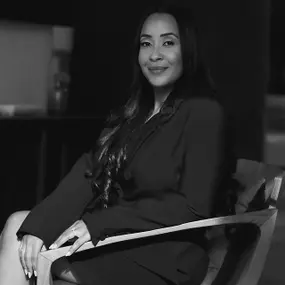
CEO of DISLA
Anais Disla Cabral is the founder of DISLA, a strategy and production studio supporting events and special projects for cultural institutions, mission-driven organizations, and purpose-led brands. She spent 20 years in the events industry including senior leadership at the Metropolitan Museum of Art, where she became the first woman of color to lead production of the Met Gala. Through DISLA, she’s produced the Studio Museum’s reopening event series, and most recently the Lucas Museum of Narrative Art’s opening events, which included member previews, a neighborhood preview day, and a September 19 opening night co-chaired by Lewis Hamilton, Tom Cruise, Greta Gerwig, Steven Spielberg, Guillermo del Toro, and Pharrell Williams, for George Lucas and Mellody Hobson's museum. She was named to BizBash's 40 under 40 in 2022.