

Maya Dajon: Attachment, Connection & Reclamation | WOC Live — The Reclamation Series

 Apple Podcasts Apple Podcasts
 YouTube YouTube
 Spotify Spotify
 iHeartRadio iHeartRadio
 Amazon Music Amazon Music
 Overcast Overcast
 Castro Castro
 RSS Feed RSS Feed
 Deezer Deezer
 Gaana Gaana
 PlayerFM PlayerFM
 JioSaavn JioSaavn
 TuneIn TuneIn
 RadioPublic RadioPublic
 Audible Audible
 Castbox Castbox
 Pandora Pandora
 Podcast Addict Podcast Addict
 Spreaker Spreaker
 Podchaser Podchaser
Key Takeaways
- Maya Dajon explains how to tell whether you need wellness support or a therapist, using one simple question about your activities of daily living.
- Maya breaks down the four attachment styles and why yours is not permanent. A breakup or a loss can shift it, and self-awareness helps you return to your baseline.
- As a relationship practitioner and EMDR therapist, Maya shares how to find the right therapist, why interviewing practitioners matters, and why one therapist not working does not mean therapy does not work.
- Maya describes what real change looks like in her clients, from noticing what is happening in the body to using a tool, setting a boundary and communicating a need.
- Accountability, asking for help and saying what you need out loud: Maya shares how reclaiming yourself reaches the people closest to you.
This week on Women of Color: An Intimate Conversation, host Deneen L. Garrett continues The Reclamation Series with Relationship Practitioner and EMDR therapist Maya Dajon, founder of Chill Vibrations. Maya breaks down attachment styles, how to tell whether you need wellness support or a therapist, and what it takes to bring the reclamation of self into how we connect with others.
An award-winning practitioner, Maya combines attachment-based insight and somatic breathwork to help clients build secure, grounded, emotionally connected relationships, and supports families through pregnancy, postpartum, and other transitions of parenthood.
In This Episode
- Wellness support vs. therapy: the question Maya says to ask yourself to know which you need
- The four attachment styles, and why yours is not permanent
- How to find the right therapist, and why one that didn't work doesn't mean therapy doesn't work
- What Maya sees when a client has moved beyond surface-level change
- Accountability, asking for help, and communicating what you need so reclamation reaches your relationships
Connect with Maya
- Website: chillvibrations.com
- Guest Profile: https://www.womenofcoloranintimateconversation.com/guests/maya-dajon/
Join the Movement
The Dream Lifestyle® Collective is our weekly newsletter for Black women 50+ who are ready to dream boldly, decide intentionally, and drive their vision → deneenlgarrett.com
Women of Color: An Intimate Conversation is ranked in the Top 5% of 4M+ podcasts worldwide, with 200+ episodes and counting.
Subscribe · Leave a Review · Share with a woman who needs this today.
Host: Deneen L. Garrett is a Cultural Alchemist and Media Architect helping Black women 50+ dream boldly, decide intentionally, and drive their vision. Catch the live show every Thursday at 1PM ET on YouTube @DeneenLGarrett. Learn more at deneenlgarrett.com.
The Reclamation Series: Reclaim Your Voice, Own Your Power
Live Thursdays at 1PM ET on YouTube and LinkedIn.
- Oct 15 — Audrey Davis-Dunning: Get Your Goddess: Reclaiming Your Power
- Oct 22 — Suprit Gupta: Breaking Brown, Becoming Bold
- Oct 29 — Maya Dajon: The Wholeness Beneath the Healing (this episode)
- Nov 5 — Eva Kennedy: Remember Who You Are
- Nov 12 — Barron Witherspoon: The Black Exec & the Seven Myths
- Nov 19 — Joyel Crawford: Show Your Ask: The Cost of Staying Quiet (series finale)
Year-End Lives
-
- Nov 26 — Anais Cabral: Thanksgiving Special
- Dec 3 — Camille Jackson: Building Sacred Ground
- Returning January 7, 2027
Frequently Asked Questions
Who is Maya Dajon and what is her background?
Maya Dajon is a relationship practitioner and EMDR therapist, and the founder of Chill Vibrations, a wellness practice for professionals, entrepreneurs, individuals and couples. She combines attachment-based insight and somatic breathwork to help clients build secure relationships, and supports parents through pregnancy, postpartum and other transitions.
How do I know if I need a therapist or a wellness practitioner?
Maya suggests asking yourself whether you can do your activities of daily living, such as getting up, taking care of yourself and being around people. If those feel out of reach, consider a mental health clinician. If you feel overwhelmed but can function, a wellness practitioner may be a good fit. Both can be true, and there is no shame in asking for a higher level of care.
Can your attachment style change?
Yes. Maya explains that an attachment style is not permanent. Everyone gets triggered, and events like a breakup or a loss can shift it, but self-awareness helps you ground yourself and return to your baseline.
How do I find the right therapist?
Maya recommends starting with your EAP or insurance, then doing consultations with several practitioners. Ask what they are trained in and how they differ from a talk therapist, and notice whether you feel understood. If one does not work, try another.
What is The Reclamation Series on Women of Color: An Intimate Conversation?
The Reclamation Series is a special live lineup hosted by Deneen L. Garrett on Thursdays at 1PM ET, featuring guests who share how to reclaim your voice and own your power.
We find out. Let's go.
Welcome to Women of Color, an intimate conversation. I'm Den Garrett, the creator and host of this top 5% podcast. We center and empower women of color. We also have a free newsletter built specifically for black women 50 plus the dream lifestyle collective. Shout out to our production team at the Louiswis at the Leon Thomas Group and especially our producer Stewart senior. Today's guest is Maya Deon. She is a psychiatrist um with the BHSS the things and she'll share more about her credentials. She's an award-winning relationship practition practitioner and founder of Chill Vibrations, a wellness practice for professionals, entrepreneurs, individuals, and couples. Maya combines attachmentbased insight and somatic breath work to help clients build secure, grounded relationships and supports parents through pregnancy, postpartum, and other tender transitions. Today we continue the reclamation series, reclaim your voice, own your power with a part of reclamation that happens between people. Maya Dejan, welcome to women of color. Hello Denise, thank you for having me. I just wanted to do just a little uh add in that I'm not a psychiatrist. That's an MD. Um I am a psychotherapist which is a therapist that specializes in mental health and trauma and also relationship practitioner where I do non-clinical wellness uh support for clients and couples as well. So a little bit of the wellness side and the clinical side at the EMDR therapist therapist but not a psychiatrist. Thank you for that. I'm like I knew she had clean it up. I don't know what this PSY
Yes. So, I'll let her jump in on that. And I will say that she is actually my um re relationship counselor. So, we'll see if this is going to be like a mini um counseling session or not. But this is for you all, those who are watching, those who are listening. So, tap in, comment. We want to know that you're out there and we appreciate your um engagement today. So Maya, your approach, your approach to relationships is described as structured, direct, and relationally strategic. Why did you build your practice that way instead of more open-ended therapy model people expect? Yeah, that's a good question. Um, well, I started off on the wellness side. So with wellness, like how me and you uh work on the wellness space, there's a lot more flexibility in wellness. Um when it comes to therapy there's more restrictions which nothing is wrong with that right therapy has restrictions for a reason um but in wellness you have more freedom um I would say the main thing that I love about the wellness space that's different than the clinical space is um there is one no diagnosis involved when you do wellness we focus on grounding we focus on um behavioral health nonclinical and um having more body awareness. Uh you do not base anything off of a clinical treatment plan. That's totally on the clinical side for the therapy side. So I started off in that area because I can work with clients anywhere in the world. It doesn't matter. I don't have restrictions on licensing. um I don't have the same um I guess um areas where it's just look we have to focus on this diagnosis and go from there and that's all we can do with wellness you have freedom to do various types of wellness techniques um more freedom with the client so I feel that's why I started off there and I also added the clinical side later in my practice and I became a relationship therapist as well, specifically EMDR, which is eye movement desensitization reprocessing. Um, I expanded to the clinical side because I realized there was other levels that clients need it beyond wellness. Sometimes you need um more trauma- based focused care. So, I feel both are important, but I start off in the wellness because I just it was more of an area for growth and also freedom. Yeah. And I definitely appreciate the approach. Um it is a different approach, you know, as far as me having, you know, met with other um therapists and whatnot. Um and to be able to do the grounding, right, that's new for me. Um to to take the time to do that and when I actually practice it outside of our sessions, there there is value and it is a benefit and it also takes practice, right? Because it's not something that I'm used to doing. So, I have to remind myself to do it. Um, to go ahead and get those benefits. And that and that is part of what it's about, right? That's part of why we're having a conversation because if it was a practice of mine, if it was something that I was already doing, then we wouldn't necessarily need to have the conversations, right? Because, you know, what we talk about wouldn't necessarily be an issue because, you know, I already have a a handle on that. And so with other people as well for their reasons for seeking um a counselor or a therapist. Yeah, exactly. And I love to be able to talk about that's why I'm glad you asked why did I start off in the wellness space versus in the therapy space. I feel a lot of people do need to understand and know that there are so many types of care and support. Therapy and clinical support is not like a necessity for everybody. Everyone doesn't have a clinical diagnosis. Um, one thing I would say that is really important to understand is people ask me how do I know I can go to someone for let's say Reiki um a yoga practitioner all those wellness um practitioners out there they want to know should I go to a wellness practitioner should I go to a therapist and I really feel that answering that I'm very careful in answering that okay because I don't want to tell anyone who they should or should or shouldn't go to. However, what I do say is one thing to ask yourself is can you do your ADLs? What are your ADLs? Your activities of daily living? Can you get up? Can you brush your teeth? Are you having problems um going outside, engaging with people? Are you feeling like you're constantly crying? Are you feeling like you can't focus? You can't maintain your everyday life? If that if you answered yes to any of those questions, you're struggling in those areas, that's when I would say that you should go to a clinician, a mental health clinician, and see if there is something wrong where there is a diagnosis and a clinical treatment plan that is needed, right? But if you're just struggling in something where daytoday where you're just like you're feeling overwhelmed, but you can get up, you can do your everyday tasks, but you're just you feel like you need extra grounding, maybe awareness like me. I specialize in relationship support. Um maybe you're struggling in how you communicate with others. Then you can say, you know what, let me try somebody who specialize in the wellness space and see if that supports you. If not, then you know like me, I have both um lenses. I have a clinical lens and a wellness lens. So if I see my clients are in need are more a clinical care, I will say that and I say that especially when I work with couples. Yeah. Yeah. Um and so what we talk a lot about on the podcast and it seems like it comes up in every conversation is that things start with us, right? And so the relationship or one of the relationships that we definitely need to have, you know, tight is our relationships with ourselves. And that is one of the relationships that we don't necessarily put as much emphasis on. Um and and that's why sometimes we're in situations that we're in regardless of what it is, whether it's a personal relationship, whether it's with a partner, well in a workplace, etc. um we're not necessarily in tune with what it is that we want for ourselves and so we're just kind of like just moving through life, right? And bending to other people's um whims, if you will. Do you see that in your conversations? Yes, for sure. Um that's one of the things that I really highlight is especially when someone comes to meet with me on the wellness side and this is again nonclinical counseling and support. Um a lot of the times my clients come to me specifically because they see I specialize in relationship healing. That is my background specially and I um I would say I expanded my expertise when I got my clinical masters in marriage and family therapy and that field is specially focused in relationships and how can you have rel healthy relationships and I always start with self first um how is your relationship with yourself how is your awareness with yourself um can you take social cues that's big a lot of people I dismiss social cues and they can get ghosted by people and they're like, "Why did I get co ghost ghosted by this person?" And it's like sometimes it's because you don't have good social cues. You can't pick up when someone is uncomfortable or when someone is um looking at you in a certain way like why did you just say that to me? you know, and they don't know how to really communicate or how to take um I guess little hints that people give and of course you can't read people's minds, but social social cues are very important in in awareness, being aware of your surroundings um and yourself and how you're talking to people and watching their reactions. I feel all those things are really important in self-awareness. Absolutely. So you integrate attachmentbased insight and somatic breath work into your work. Why does Yeah. So why does understanding our attachment patterns matter so much for building secure grounded relationships? Yes. I definitely feel on a foundational level of attachment styles. Um see if I can picture the four main because they've expanded attachment um theory so much. But um starting off with secure attachment is essentially and I'm just going to do just like a short overview of it. Um essentially having a secure attachment style is something that I feel is important for us to at least understand what it is. Um and that's part of attachment theory is understanding your attachment style. And it essentially it's it's how you move through life, how you communicate with others, and how you connect with others. So there's um secure, which is just a short overview, more grounded. You have awareness, you know how to have healthy boundaries, um you know how to take feedback well, um you can regulate yourself, um you can communicate in in a healthy way with others without lashing out. Just a short overview. And then we have the um disorganized attachment which is um you are you can have a mix of anxious and um avoidance and essentially so you are open to connecting with someone. You can get close to someone but and then there is something that kind of stops you and then you pull back. So there is an imbalance which is why it's disorganized. And then we have the anxious attachment where you there's a lot of uh feelings of being unsure. Um you can get really um let's say you can overthink a lot with things. You meet someone, you like them, you're thinking, well I'm not sure if they like me. Um do they like me? and you overthink a lot. I would say a lot of um rambling thoughts, racing thoughts, and um you feel unsure of yourself. So, you're constantly trying to prove yourself or trying to prove your worthiness or make sure somebody likes you, I would say. Um and then the other attachment style, which is um when you're avoidant. So the avoidant attachment is when as soon as you start getting close to someone um you start feeling fear and then you detach. So um that's the another attachment and they've expanded on these attachment styles and I'm just going through a short overview of them. Um, but I really feel knowing your attachment style is important because it allows you to see maybe some of your your past relationship trauma and it helps you to understand why you may react a certain way when you get close to someone. Um, and it could be a love interest, it could be a friendship, it could be a family member. there's various various different reasons why we respond and connect or disconnect um with people. So I feel it's it's interesting to understand um those various things about ourselves because it can help us to grow as individuals. Yeah. And so where do we want to be? We definitely want to be in a secure attachment. Um, level grounded, able to regulate, able to take feedback from others. Um, able to communicate healthy boundaries with others that we want or standards that and how we want to be treated without constantly thinking, oh no, if I say this, is this person not going to like me? um or is this person gonna move away from from me because I set these standards or boundaries. Um however, I do want to say that having a secure attachment does not mean that you can't be triggered and or activated because something happens. Like for example, if you have a breakup or a family member dies, um you can revert back to another attachment style. Being in an attachment style is not permanent. Um that's one thing I do want to stress. It is not permanent, but we can have what's called a baseline, which is essentially um our overall acting attachment where this is where we normally sit, right? Um which it would be nice to sit in a secure attachment like have that be your baseline where that's usually where you are, you know? Um because then you're level, you're able to ground, you can have healthy communication, you can take feedback. um and things like that. Th those are I always say that's a desired area that you want to be in. But know that everyone gets triggered. We all have traumas. But I feel that when you're in a secure attachment style, you are more self-aware. You can say, "I'm noticing I'm starting to have some anxious attachment right now towards this person that I really like. Where is this coming from? Um what can I do? Let me ground myself. Let me maybe journal about this. let me maybe see my therapist, let me see a practitioner, let me talk to a friend and try to get back to my baseline. And so what you just said was very key and it's and it's also kind of, you know, what I said, right? Getting back to our self, knowing ourselves, right? Reclaiming ourselves. That's what this conversation is about is reclamation. And so when you do know your attachment style, as you said, when you see something happening, you're like, "Oh, wait, wait, wait. This I know what this is. Hold on. let me step back and like you said, let me go ahead and ground myself. So, is there regardless of your attachment style, is there like one particular grounding that would work regardless of your attachment style? No, definitely not. Um, I feel that really comes down to self-awareness. When you start knowing who you are and what brings you peace, and I'll say that again, knowing who you are and what brings you peace. Peace looks different for everybody. For example, I'm an artist. I'm also a sag after actor or filmmaker. Um, what brings me peace is listening to music. That's what g uh puts me back down to center. It grounds me back to center. um watching something creative because I'm an artist. I love watching funny movies that helps me to feel calm and centered. Uh I also write that brings me peace that brings me to more of a grounded state. So knowing what brings you peace and what helps you to feel calm and doing a body scan, meditation, all those things are important, but you have to know you first. Yeah. Yes. And so I'm sure you you know some of the people that you see whether it's individuals, couples, even just personally you know people that you have conversations with and there's things that we know we should do right whether it's around this or other things but we don't do it like what has been your experience as to maybe why we're not like like I said earlier you know like okay the grounding and the things that we talk about when I do those things I see the value and the benefit but I'm not always doing them like it's not a habit. Is there something that you can point to to say, okay, this is kind of why people don't do the things that they know they should or would be helpful. I would definitely say that is impossible for me to say because everyone's so unique and that's what makes us beautiful. You know, we're we're so unique. We're individuals. That's the reason why I don't give advice, right? because I whatever I feel and I think has nothing to do with what's going on with you personally. Um so again it comes back to your self-awareness. I can only say for me I'm being transparent when I meet with my therapist and he says Maya why don't you go out or why don't you do this? I'm like honestly I'm just not motivated. I'm not motivated. I don't feel like doing all the things you're telling me to do this week or I'm going through a lot. you know, I'm stressed out right now and I know all the ways to ground. I know all the ways to be calm, but we're all human beings, you know, and sometimes we get stressed and overwhelmed. But I feel like the most important thing to to have is a healthy support system. And even if sometimes you don't feel like doing the work, at least if you have friends or you have people around you that care about you and love you, you can still find that peace and grounding around that circle of love. Yeah. And speaking of going out, being outside, we both are actually going to be at the same place next week, but at different times. Yes. And um I see that you're hosting something. So let's talk about that. So, for the people who are going to be at Afro Tech next week in Houston, um that's November 2 through 6. Um Maya is hosting something on the 5th. I think that's is that's a Thursday, right? Yes. So, what are you hosting? Talk to us about that. Yes. Now, you put me on the spot. I don't have a flyer in front of me. Um but yes, I am hosting an event for Afro. It's a day party. Um, actually, so it's going to be called Tech Tequila Social Day Party on Friday, November 6, um, from 2:00 to 9:00 p.m. And, um, it's going to be at the Rooftop Lounge at Privilege Houston. Um, and it's going to be through blacksocial.com. So, I'm going to be hosting that. um essentially just bring bringing together all the black tech professionals and tech is something I expand it into. So I I do do um I do have I should say digital uh content, wellness content, mental health content, and I definitely want to expand more into having an app for my mental health uh wellness support. So I'm expanding. So that's another reason why I really wanted to I'm excited. is my first time going to Afrote next week. Yeah, I I was so when I saw that I'm like, okay, look at how she is really um grounding herself into the experience and I absolutely loved it. Love, love, love. So, yes. So, again, if you're going to AfroTech, make sure you check it out. It's on Friday of next week. Um and it's from 2 to 9. And you can go to follow Maya on Instagram. She does have it there and you will have her contact information in the show notes. So Maya, you also support clients through pregnancy, postpartum, and the tender transitions of parenthood. When we come back, I want to know what those moments have taught you about connection that applies to every woman watching. Stay with us. Okay, here we're going to do a reveal of Gym Blends um Sip and Shine. So, let's see what we have in here. Cute little sticker. You're a gem. I am a gem. I love it. I'm also an investor. So, I'm really excited to uh check out the product. So, this uh let's see. Okay. So, we have six cans and I just want to show you the products. So, I invested in Yaki water which was introduced by Arlene Hamilton at her your first million buy. I think that was in April of 2023 or 2024, one or the other. And so I made an investment, actually made a smaller investment for my son, Cous. And fast forward to now, um Arland has um partnered with another woman and they came up with the brand Chim. So we have this one. Does it have the Okay. passion fruit, guava, we have lemon lime, and we have orange tangerine. So, I'm not going to try them now. I just wanted to um do an unveil and bring them out the box and see what they look like and excited to try them and share them with you. So, um do check out the information. Um, you can order, get a discount, and let me know what you think. All right. Well, welcome back to Women of Color and Intimate Conversation. Today, we're talking about attachment, connection, and what it takes to build secure, grounded relationships with Maya Dean. So, make sure you're out there, drop a comment, let us know, engage with us. Um before the break I asked Maya what she's learned about connection through some of life's most tender transitions. Yes. Um so essentially I when I started chill vibrations which is my wellness business um my focus was on having healthy relationships healing from relationship trauma non-clinical support in the wellness space through grounding body awareness behavioral health which is one of my credentials that I completed through UCLA. extension as a behavioral health support specialist and I later received a community health worker um certification from LMU Leola Marrammont University as well. So that's more of my wellness side. So I decided to expand because I'm, you know, I'm noticing I'm working with couples. They have kids. Um how else can I support my families and my couples? And that's why I went back did some further um training and I completed a full spectrum doula uh program and through that program and medical partnered I'm now a medical provider and so I work with um mothers um expecting mothers um women who lost a pregnancy as well birth loss, abortion, um, and families. So, I work with couples in that space as well. However, my focus more so is how is your life now after the pregnancy, after the birth, and how can you reconnect with your partner? How can you still keep your love life even when you have a child in the space and still be able to care for um your child or children um while still caring for your partner. So I still work on relationship building, relationship connections um but it's specialized through um my other business called um paranatal rest space. And so I focus on paranatal care, paranatal support in that space. And I also since I'm in California, I also take various insuranceances and um medical as well to support uh parents in that space. So I feel like it really helped me to expand um with birth and after birth. I would say it's another level of care. Mhm. Yes. And um what has been like your I don't know most pivotal moment um with this with this pivot? Like what have you learned by um adding this this layer to your practice? Yeah, I would say that it definitely is a nice um change up. Um, I I would say what stands out the most is I get to work with moms who just really need a support system, somebody to talk to outside of family members or their partner. And a lot of the times I work with mothers who don't have a support system. So it feels really good to be able to be there for them and provide resources and connect them with various birth workers who are there to support them through their change. And I would say another area is to reaffirm that postpartum depression is real. And I also some other things that I do I feel is really valuable in that space is because I also have a clinical lens I'm able to prep them because I transition my paranatal clients um from me cuz we only get so many sessions through insurance. It's limited. So after our insurance sessions are when they're ending I should say um I prep them and I try my best to connect them to a traumabased therapist. Um, and I do want to highlight there is a difference between because everybody thinks therapy is the same. When you ask them, "So, do you go to therapy?" And they're like, "Yeah, I do." But then when you ask them, "What kind of therapy?" Like, it's a deer in headlights. I don't know what's happening, they're like, "What do you mean I go to therapy?" Therapy is not it. It's not the same. It's like every person you go to doesn't specialize in certain types of input
you go to does not specialize in trauma care. They have a background a clinical background. All therapists have a clinical background but every therapist doesn't specialize in trauma and every therapist doesn't specialize in trauma- based care. A lot of therapists out there are just talk therapists. And essentially what a talk therapist is is someone that you have basically a dialogue with. Um they are there to uh listen to you to support you in what you're verbally sharing. And yes, they are um also trained to notice if there is a change in behavior. Um they all therapists have to diagnose you. That's what we all do. Um, but a lot of therapists, they do not go beyond their clinical degree to specialized in a specific type of traumabased intervention. Let me use that word interventionbased care model. So, what I try to do in the paranatal space is because a lot of my moms um have gone through because I work with a lot of women of color. So, generational trauma, um, they could have gone through birth trauma, um, relationship trauma. So, I want to connect them with a trauma-based intervention-based therapist like me. I'm an EMDR therapist. So I try to connect them with an EMDR therapist or another type of intervention is um like DBT which is dialectical behavioral therapy which is I would say a mix between um grounding and um other types of interventions where DBT involves homework and I I really like DBT. It's like a mix um of meditation, grounding, and then u more clinical work. Um and then there are CBT, cognitive behavioral therapy. A lot of therapists, they go crazy with CBT because it's it it's popular with trauma. It's involves a lot of homework. I that's I like CBT sometimes because it's kind of homework heavy. It does help with a lot of processing, mentally processing. Um, and then we have what's called um, brain spotting, which I'm familiar, but I'm not trained in brain spotting. Um, and I don't know that much about it to really speak on it. Um, but it's another interventionbased uh, trauma care. And then we have um, hypnosis. There's the hypnosis therapy. Um, and then um, ketamine treatment. I'm not really familiar with ketamine, but it's another form of trauma treatment that you can go to a therapist for, which I can't speak on because that's out of my uh level of care. I don't specialize in that. But there's so many different types of traumabased and interventionbased therapists that get to the core um underlining core of what is happening in your body versus a talk therapist where you pretty much have a dialogue. It's another level above talking to a friend because you have a specialist that is not there to take sides. Um but they are there to challenge thought. I do want to say that um talk therapists what they should be doing is challenging thought to help you to have a deeper sense of thought in processing that that's what I would say the key um with a good talk therapist is they will challenge thought and have help you with deeper processing your thoughts. That is what their skill set should be. I do want to add um please be mindful um especially if you're going to a talk therapist that that therapist is not giving you advice because that is not their job. And I will say that and and I love that you mentioned all these different types of therapists because what that does and helps people is again and you kind of said something about this earlier is that when you're needing help, seeking help and you go to somebody and it it may not, you know, you may not connect with that individual. Try somebody else. Try a different type, right? Because there's so many different kinds that are out and of course it could get overwhelming, right? Because that was a lot like you just shared with us. That was a lot. It was a lot. Some Yeah. For someone who right like I don't know where to go. Like who do I go to? Like just forget it. But no, you have to go and and you know and make the attempt. And again, if that one person you don't connect with, that's fine. Like don't just give up on it because you went there for a reason. But do spend the time and the energy um and do the due diligence to find somebody that you do connect with. You know, I agree. And you know what I think is important because yes, there's so many different modalities. And I'd even name the ones I'm trained in besides EMDR, I'm also trained in EFT, which is emotionally focused therapy, and um Gottman method, which is more for for couples. I'm trained in all of those certificate trainings and all of those modalities. Um but someone outside of the clinical space, they're like, "Okay, Maya, what are you talking about? That doesn't make any sense to me." Right? So my clients in the wellness space ask me because when I work with couples one thing I do with my couples is I say okay which are both of you in individual therapy that's what I ask them you know and some of them say ma do we need to go to therapy can we do can we go to someone's wellness and I said of course like you can go some to someone in the wellness space um however if I'm noticing there's a higher keyword higher level of care needed I will say that. Um, so how do you know how do you know who to go to? Um, I would reference back to what I said earlier, your ADLs, um, activities of daily living. Are you struggling with getting up? Are you constantly crying? Are you um, feeling anxious? You can't be in social environments. You're having trouble in your day-to-day life. Um, that's when I would say start if you really feel you may need clinical care, higher level of care. I would say what you do is you interview therapists. You interview, that's what consultations are for. You could ask all those questions in those consultations. So, if you're like, you know, let's say for example, um, somebody is um maybe they went through a traumatic experience. Let's use trauma because that's on the clinical side where I specialize in trauma and EMDR. So, let's say you went through a traumatic experience and you're like, I really think that it's interfering with my day-to-day day-to-day life and I don't know what type of therapist to go to. I feel like I need more than a talk therapist. Then start looking up what are some therapists in your area that specialize in trauma. do those consultations and say, "Look, I need to know what what have you been trained in?" Like what are the modalities? What are the tools you use? Are you a talk therapist? Tell me the difference between what you do and what a talk therapist does. Ask all those questions in consultations and have various consultations with various practitioners and ask all those questions and you'll learn and you'll see do they know what they're talking about or not. Right? And then also what you said Denine too is do I feel connected to this person? Do I feel this person can get me right? Um that's how you find out who's the best for you is you go to those consultations and then there are there are tools. So you know if you work um you can call the like the employee I forget what it's called but like EAP or you call somebody. is another one. You get so many free sessions, right? And they ask questions to help you kind of not narrow down like, you know, the type person and even probably when you go to your insurance and like, "Oh, I'm looking for this." And they'll probably ask questions. And then the 211 number, is that like a 211? Yeah, that's 21 is they give you resources. Yes. They can't really break down the type of care, but they can give you resources. So yes, EAP calling your insurance even though like some of them they may not you know know all those clinical you know answers but that's why I say you know start there start with EAP start with your um you know insurance right and do your research do your own research online and then start with those and then go to the consultations and ask lots of questions in consultations to understand and once you have enough consultations you're you're going to know who you feel right with and then even if you start with someone and they don't work then go to someone else. You don't you're not stuck with them. And just because therapy didn't work with one therapist. That does not mean and I just want to this is very important. Just because therapy didn't work with that one therapist doesn't mean therapy doesn't work. It just didn't work with that person. Correct. Correct. And that's definitely what I wanted to stress as well. like there. I mean, again, you named all these different modalities and so there are some of them out there that you're going to eventually connect with. So, yeah, you know, you need it, then just keep at it. Be persistent. So, you talk about guiding clients be beyond surface level change toward lasting relational transformation. What does surface level change look like and how do you know when a client has moved past it? What does surface level change look like? Well, one thing that I noticed is especially let me just say the wellness side um rather than before I go to the the clinical side. So on the wellness side, I do recaps at the end of every session. I do homework for my clients. It's more I would say interventionbased wellness in that space. And because I focus more on body awareness and um being able to acknowledge social cues, uh to be able to focus on having those healthy boundaries and what they look like, I can tell clients are actually doing the work because of the way they'll come in and talk to me. It's how they they have conversation with me. It shifts. So, they can start off talking to me and saying things like, um, "Yeah, I'm feeling really overwhelmed and I don't know um what's happening right now or why I'm doing X, Y, and Z." And then later on they come to me and they say things like, um, my you know what, when I was out of an event last week, um, I was noticing that my hands were sweaty and, um, I was feeling overwhelmed and my heart started beating really fast. And because I noticed I was feeling anxious, I went to the bathroom and I did one of the tools you gave me. I did the box breathing exercise. And after that I was able to ground and feel better and I was able to um talk to myself like do some self positive self-t talk and ask myself what was happening and I realized that I was having a flashback of a past experience where I said the wrong thing you know things like that they'll be able to start having more awareness. um they'll be able to start telling me talking to me about um some of their healthy boundaries that they wanted to have and then they come back and say, "You know what, Maya, I realize that I used one of my boundaries last week and I felt good about it." You know, that's when you know that it's working. That's when you know the homework is being done. Um and that's when you know that clients are transitioning from the old way of thinking to a healthier reframe um of thinking. So that's what I can see that the change is working and also my clients start to we we shift away like we can shift our goals. the goals that we started with in our our sessions together now we're like you know those those are everyday things like I do them organically I don't need you know support and reminding I I want to work on some other things that's when you know that you have um moved past some of the areas that you were struggling with in the beginning yes good and so yes uh Maya is big on homework and providing resources Yes, I can definitely attest to that. Yes, for sure. Work to do.
So, Maya, you built a career helping people reclaim secure, grounded connection with themselves and with each other. For the woman who's watching, who spent this month reclaiming herself, but is still guarded in how she connects with others, what is the one thing she needs to do today to let that re reclamation reach her relationships, too? Well, the word that comes to mind right away is accountability. Um, accountability is the first step I feel in shifting and having a change. um and asking yourself, have I taken accountability for some of the things that I've done as far as let's just focus on relationships? Um am I still blaming the other person for the relationship not working or did I sit down, look in the mirror, and take a self-evaluation of myself? What are some things I can improve? Write down some of the things that you see that you want to work on within yourself. And if you have one of those famous lists that a lot of single ladies have with their ideal partner list, ask yourself, are you, you know, matching all the things on that list? Like, um, so many, uh, women have a list where it's like the funny one is, I want a man who's six foot, makes six figures, right? has a six-pack. Like, do you make six figures? Do you have a six-pack? Like, you know, are you all those things that you're wanting in other people? Are you being superficial? Right? Are those real things that you need or are they just superficial wants that you have? Right? How is this person's character? How is your character? You know, um having that self-reflection and then also asking for help, I would say, is the next step. Asking for help. Everyone, and I stress this to everyone because I'm in the wellness space and in the therapy space, right? Everyone doesn't need a therapist. Everyone doesn't need that. Um, there are so many different types of practitioners out there. There's Reiki practitioners, there's sound bath practitioners, there's yoga practitioners. Some people are just like, I need a space to feel safe. I need a space to feel grounded. Um, I need just need to have some body awareness. I need to have awareness of what's happening um in how I communicate, you know. So, I I will say that, you know, um therapy isn't for everybody. It's not. Um there's all different types of care and support. Um some people um say, you know, I just rather just pray about it. And that's fine, too. And I will say that um keep in mind that sometimes you do need a higher level of care and don't be ashamed of that. So I feel both things can be true. Everyone doesn't need therapy and sometimes people do need a higher level of care and don't be ashamed to ask for it if you need it. Right. And so you mentioned lists. So what type of lists should we keep? Are there lists that we should keep? Well, I feel like I I'll say that with a grain of salt that when it comes to your standard of care, how do you want to be treated? I feel that that is important to have. I mean, I have my own list of my ideal husband, but am I looking at it every day? No. Um, I feel at the end of the day, and I can just say for me personally, um, I can't speak for other people out there because I'm not here to give advice. I feel that you should have that self-awareness to know what matters to you, what's important to you. But I feel that at the end of the day, you should know, should you have list, everyone doesn't need a list, but should you have a standard of standard of care that you expect from others? Absolutely. Um, is it helpful to write it out? It can be, you know, um, sometimes some people say that, you know, I just want mutual respect. That's that's all I really want from other people. I want people to treat me how I want to be treated. You know, that's um something you may believe. Some people want to write things down or they need to write it down to remind themselves so they can put it up somewhere. Um I feel it all depends on the individual. Um, I personally, like I said, I do have a list of my ideal husband, but I don't have a list uh written down of how I want people to treat me because that's just mentally ingrained. I know that I want to have respect and I want to give respect as well. And I also want to give grace because nobody's perfect. Everyone's going to let you down at some point. So, we have to be realistic. And we also have to communicate. I still having this whole uh there's like this big um I would say what push on ghosting people or blocking people. I feel like that is problematic. Um I feel this work working working on communicating um what we need instead of assuming people can read our minds. I feel we should start there. Like communicate, share what you need. Um share how you want to be treated. Give somebody an opportunity to actually uh treat you the way you want. And if they mess up, I feel that we should work on talking to them about it, right? Talk to someone about how you feel. If they still are not listening or ignoring you, then yeah, maybe they are not um in alignment to be in your life, right? Maybe they're not following your standards or boundaries and we have to be able to know how we want to be treat treated and stand on that. Right. Yeah. So I feel that's important. Yeah. So give them the opportunity and gauge the reaction and then keep it moving. Yeah. Right. Don't necessarily close and lock the door depending on what happens. But um and don't assume don't assume that people know what you're thinking. That's just it's nuts. Like no one can read your mind. And that's the biggest thing with couples I work on every day. So many couples are like, "Well, he should have known or she should have known. She should have known." But my question to every single time they say that, I'm like, "Okay, do either of you know what I'm thinking right now? Do you think I know what either of you are thinking right now?" And yes, you're in a relationship, but how does your partner know what you're thinking? Now they're I will say there are some couples that finish finish each other's sentences, right? But everyone doesn't do that and even those couples they they're not knowing what each other thinks all the time. They're rare couples that really are in sync like that, but everyone isn't. And that I feel that's an unrealistic goal. I feel we should normalize communicating and talking and sharing what we're thinking, what we're feeling. If we feel disappointed and someone hurt us, tell tell them like I felt uncomfortable you did that. Like that didn't make that didn't feel good. And one thing my couples start this is how I know they're doing the homework. They start saying things in session like you know what when you said this to me. Let's say blank. When you told me that I didn't clean up last night and you were mad at me, that didn't feel good. I felt really uncomfortable and it made me feel unloved. It made me feel sad. When they start talking like that, I'm like, bam, they're doing the emotionally focused work that I have been showing them. They're really focusing on that body awareness, communication, getting more in touch with their body and communicating with their partner. And that is a beautiful thing when you see clients in front of you using that language, that healing language, it's really powerful. So why do we do that though? Why don't we communicate our needs? Why don't we just say to somebody, "Hey, I would like you to do this or it bothered me when you did that." Why don't we? Well, like I said before, and I have to keep stressing this because one thing I want everyone to know is nobody has all the answers for you. Nobody. That's why social media gurus are not going to fix your problem because everyone's unique, right? Everyone is unique. One thing I can say that it could be, right? I can say there's a probability that it could be. A lot of the times people do this because they're scared. They're scared of rejection. Does that mean that everyone's scared of rejection? Absolutely not. Okay. But I can say there is various things of why people there's various reasons why people react and do what they do and that's unique to that individual person. A lot of the times I notice that I do those things where I am afraid to communicate is because it's fear, past trauma, past feelings of rejection um or just not knowing how to share um what it is you feel. Another thing I've noticed, especially culturally, um, when I'm working with, um, I would say because I work with various clients, LGBTQ clients, um, I work with clients who are, um, uh, transgender, clients who are non-binary. So, I try not to use I try not to have a gender bias because I feel that's problematic. We can't put everyone in this group and say um one thing I hear a lot that I feel is really really problematic um in our society is women are more emotional than men. Not true. I I went into my clinical program believing that until that whole theory got debunked when we got deeper into um our studies, our clinical studies. It's not true. However, I can say culturally culturally a lot of the times in various cultures our upbringing um has caused us to have this mentality to respond in a certain way. And here is an example. Um I date I would say um primarily African men. Okay. So a lot of the times in the culture, African culture, let's be more specific, Nigerian culture, men are raised not to talk about their feelings. So, it could be could be that if you're dating a man who is African, it could be a challenge for him to communicate his feelings and show emotions to you because culturally he's raised that that's wrong, right? That is not the norm. But I also have Nigerian male friends that can totally communicate how they're feeling and thinking, right? So, we can't lump everyone together. My father um was an immigrant here to the States from Trinidad. So, he verbally told and he was also a psychologist. He had his PhD in psychology. So, he verbally told me growing up hugging, showing emotion and affection was wrong. Like that's not the norm for men in uh Trinidadian culture. That's not the norm, right? So I feel before we look at gender or a person, let's look at their upbringing, their culture and communicate and ask them questions, you know, instead of categorizing or lumping everyone together. And I feel this whole gender bias needs to just be thrown out the window and let's just communicate and talk to each other, right? Bottom line, right? Exactly. Bottom line. So reclaiming yourself was never just about you. It's about how you show up in connection, too. Secure doesn't mean guarded. Grounded doesn't mean alone. That's the dream lifestyle standard. So, Maya, before we wrap, what would you like to leave those watching or listening with? Love yourself as much as possible and prioritize your own peace, your own healing, and live for yourself and not for validation from others. Maya Dean, thank you for bringing your expertise, your care, and your grounded presence to the show today and for taking reclamation from the self into our relationships. Enormous thank you to the Leon Thomas Group for holding it down every week. This show runs because of you. And share this with a woman who's ready to bring her reclamation into how she connects, not just who she is. This conversation is for her. and tell me in the comments where is it hardest for you to let someone in. So, next Thursday, November 5th, we welcome Eva Kennedy. Finally, she was supposed to kick off the month. Um, empowerment speaker and creator of Remember Who You Are on identity, transitions, and remembering who you are. You don't want to miss it. Make sure you sub subscribe. See you then.
Relationship Practitioner
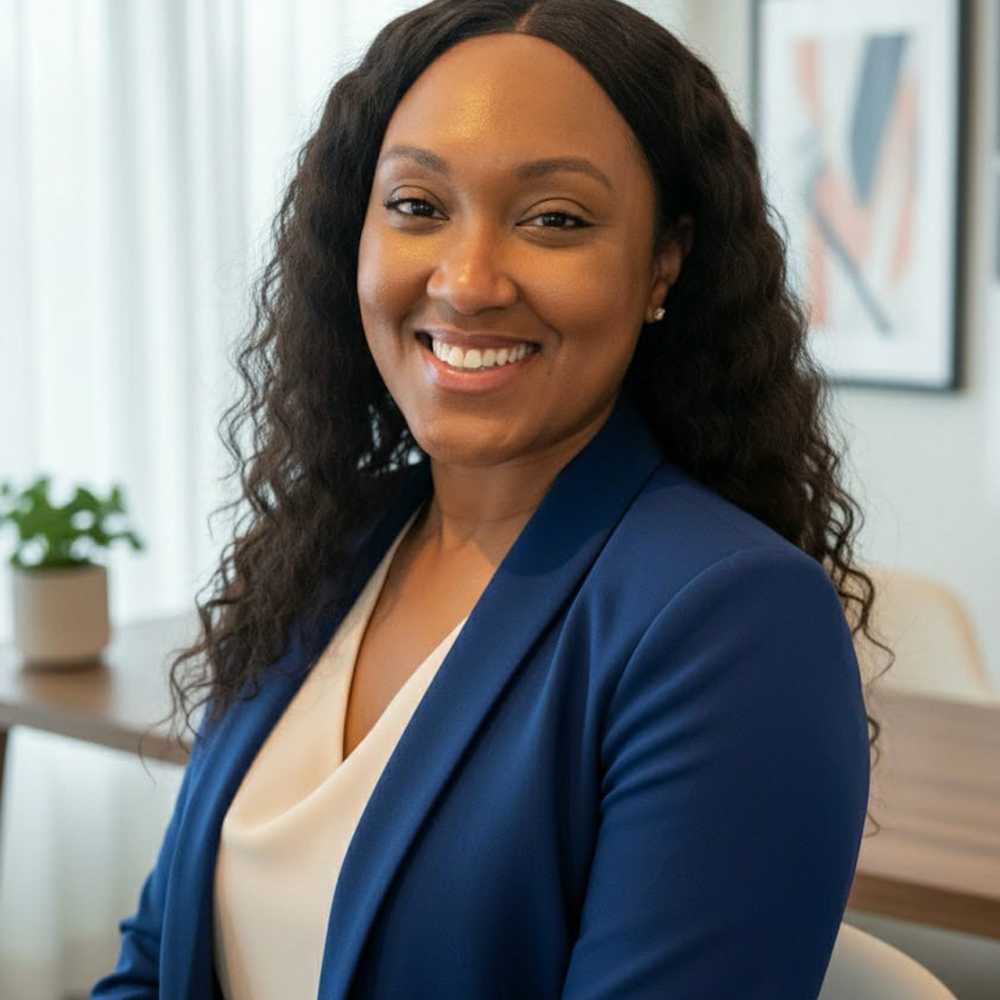
Maya Dajon, Psy.M., BHSS, is an award-winning Relationship Practitioner and the founder of Chill Vibrations, a wellness practice specializing in supporting corporate professionals, entrepreneurs, individuals, and couples seeking deeper relational and emotional wellness.
Her work is structured, direct, and relationally strategic, integrating attachment-based insight and somatic breathwork to address the underlying patterns that shape connection. Maya helps clients strengthen emotional regulation, improve communication, and better understand attachment dynamics in order to build secure, grounded, and emotionally connected relationships.
Her approach combines psychological insight with whole-person development, guiding clients beyond surface-level change toward lasting relational transformation.
In addition to her relationship work, Maya provides perinatal emotional support and education for clients navigating pregnancy, postpartum adjustment, birth loss, and other transitional stages of parenthood. Her work emphasizes emotionally informed care, emotional processing, and supportive guidance throughout the perinatal journey.
Maya holds a Master’s degree in Clinical Psychology with a concentration in Marriage and Family Therapy, is a Certified Behavioral Health Support Specialist (BHSS), and is currently pursuing a Doctorate in Leadership at USC. Her academic and professional training inform a structured, systems-based approach to relational and emotional wellness.